Lake Sediments Spark Controversy: Did a
Comet Cause the Ice Age Catastrophe?
Translated by DeepSeek V4 Pro. Translations can be inaccurate, please refer to the original post for important stuff.
Jianlin SuAugust 7, 2009#61
Author’s Note: After translating
this article, I feel I can describe the experience in one word:
exhausting! Indeed, many sentences in this article were quite ambiguous.
I have produced this version through a combination of liberal
translation, seeking advice, and Googling. Any errors are welcome to be
pointed out! During the translation process, I constantly used
dictionaries and Google, and asked for help to barely complete
it.
Ice ages, prehistoric civilizations,
extinctions, and celestial impacts—these are being discussed more and
more. What is the truth? Or could these things happen in our
future?
Lake Sediments Bring Controversy: Did a Comet Cause the Ice
Age Catastrophe?
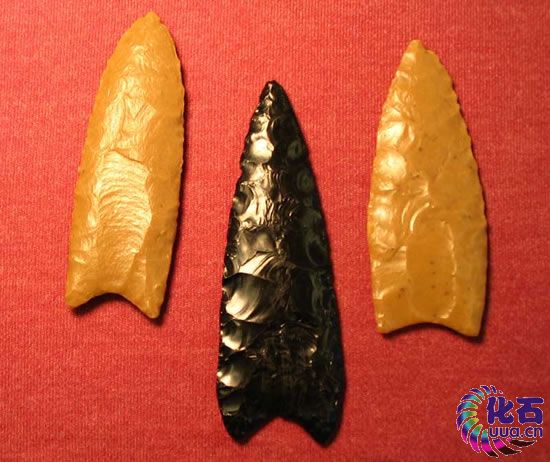
“Maybe it was the overhunting by the Clovis
people over centuries, rather than a devastating impact, that led to the
extinction of North American mammoths and other megafauna,” researchers
say.
Jacquelyn Gill, a paleoecologist at the University of
Wisconsin–Madison, says that after clearing through layers of ancient
lake sediments, her team found no evidence to support the theory that a
comet caused the Ice Age biological extinction.
“There is no natural sign to suggest this was an impact event,” Gill
stated at the Ecological Society of America meeting held here on
Tuesday. “If this was an impact event... it did not have the ecological
impact that people previously claimed.”
In 2007, Richard Firestone and his colleagues at the Lawrence
Berkeley National Laboratory published evidence suggesting that a comet
exploded in the atmosphere near the Great Lakes 12,900 years ago,
causing massive fires across North America. These fires supposedly led
to the rapid extinction of several organisms, including the Clovis
civilization on the continent and megafauna such as mammoths, ground
sloths, and 33 other genera of large mammals.
However, skeptics point to several facts: no associated impact
craters have been found, and the evidence for continental forest fires
and rapid population decline is insufficient. Furthermore, if such an
event truly occurred, how did small mammals and birds survive?
(Additionally, a recent study has questioned the likelihood of comet
impacts being the cause of multiple extinction events in Earth’s
history.)
Gill and her team decided to look for clues of a comet impact, not on
land, but in three lakes in Indiana and Ohio, where the conditions of
ancient plant pollen and minerals have remained stable, allowing for the
reconstruction of ecological environments dating back thousands of
years. They searched for all mineral samples that could be linked to a
comet impact as evidence, including ash, charcoal, magnetic grains,
silicate particles, and elements such as titanium and chromium. She did
not look for rare earth elements like iridium, which other researchers
consider signatures of an impact.
The team did not find any information indicating that a single
catastrophic event occurred 12,900 years ago. Moreover, in one of the
lakes, they found that while titanium content decreased, carbon content
actually increased. “This is clearly not an impact event,” Gill
said.
Gill also questioned whether the timing of the animals’ deaths
coincided with the timing of the comet impact.
A type of fungal spore called Sporormiella, which is closely
associated with the dung of large animals, began to decline in number
14,600 years ago, followed by the onset of the ice age. One lake showed
that the spore record was interrupted 13,600 years ago and only
recovered in the past few centuries, rising in areas used for pasture.
At the same time, the pollen of plants eaten by large animals—such as
ash, ironwood, and hop hornbeam—began to increase, indicating that plant
growth was no longer being suppressed by large herbivores.
Gill says that more recently discovered fossils of megafauna from
13,600 to 12,900 years ago were likely the last surviving species
decimated by the Clovis people with their characteristic spears.
However, Firestone was not swayed by this. As he said, “The argument
adds nothing and plays no role.” He stated that he did not expect to
find a large amount of evidence in lakes because magnetic minerals would
rust away and remain suspended in the water rather than concentrating at
the bottom of the lake. To him, the data still supports the theory of
destruction caused by extraterrestrial factors. “I think the debate will
not make much progress,” he said.
Lake Sediments Cast More Doubt That a Comet Caused Ice Age
Extinctions
Overhunting by Clovis people over centuries, not a catastrophic
impact, may have wiped out North American mammoths and other megafauna,
researchers say
ALBUQUERQUE—After combing through layers of ancient lake sediments,
paleoecologist Jacquelyn Gill of the University of Wisconsin–Madison
says her team has found no evidence to support a controversial comet
theory for an ice age extinction event.
"There’s no physical trend to suggest that there was an impact
event," Gill said Tuesday at the Ecological Society of America meeting
held here this week. "If there was an impact event...it’s not having the
ecological effects [previously] suggested."
In 2007 Richard Firestone at the Lawrence Berkeley National
Laboratory and colleagues published evidence suggesting that a comet
exploding in the atmosphere 12,900 years ago near the Great Lakes set
off massive fires in North America. These fires supposedly led to the
rapid disappearance of the continent’s Clovis culture as well as
megafauna including mammoths, ground sloths and 33 other large mammal
genera.
But skeptics point to the fact that no associated impact craters have
been found, and evidence for continental forest fires and a rapid
decline in human populations is sketchy. Besides, if such an episode had
occurred, small mammals and birds somehow survived. (Another recent
study has called into question the likelihood of comet impacts being
responsible for more than one extinction event during Earth’s
history.)
Gill and her team decided to look for hints of the comet’s impact not
on land but in three lakes in Indiana and Ohio, where pollen and
minerals have settled daily, creating an ecological record dating back
millennia. She scoured core samples for evidence of ash, charcoal,
magnetic grains, tiny silicate spheres, and elements such as titanium
and chromium that could be associated with impact events. She did not
look for rare earth minerals like iridium, which other researchers rely
on as a signature of impacts.
The team failed to find a consistent signal that would indicate that
a single catastrophe occurred around 12,900 years ago. At one lake,
titanium actually decreased at the same time charcoal was increasing.
"It’s clearly not an impact event," Gill said.
Gill also questioned the view that animals died off right at the time
of the proposed impact event.
Fungal spores called Sporormiella, associated with the dung
of large mammals, actually begin to decline 14,600 years ago, soon after
the end of the last ice age. The spores wink out of the record at one
lake 13,600 years ago and only recover in the past few centuries with
the rise in cattle grazing. At the same time, pollen from the plants
that megafauna munched on—ash, ironwood and hop hornbeam—starts piling
up, suggesting the plants’ growth was no longer being kept in check by
leaf-loving large mammals.
More recent megafauna fossils, dated between 13,600 and 12,900 years
ago, were likely the last hangers-on as the Clovis people decimated
species with their characteristic spears, Gill says.
But Firestone was not swayed by the new study, which he says "adds
nothing to the argument." He says that he would not expect to find much
evidence in lake sites because magnetic material would rust away, while
the tiny spheres float and would not collect on the lake bottom. For
him, the data still points toward an extraterrestrial impact. "As far as
I’m concerned the debate is settled," he said.