Some time ago, I accidentally came across the concept of a “low-sugar rice cooker” (also known as a “low-starch rice cooker”). At first, I thought it was some new high-tech product, but upon closer inspection, I realized it simply drains a bit of rice water while cooking. Since the rice water contains some starch, pouring it away is equivalent to consuming slightly less starch—hence the so-called low-sugar/low-starch label. Although this product looks like a total “IQ tax” (you’d be better off just eating half a mouthful less rice if you want to reduce sugar), it triggered memories of cooking during my childhood and a nostalgia for rice water.
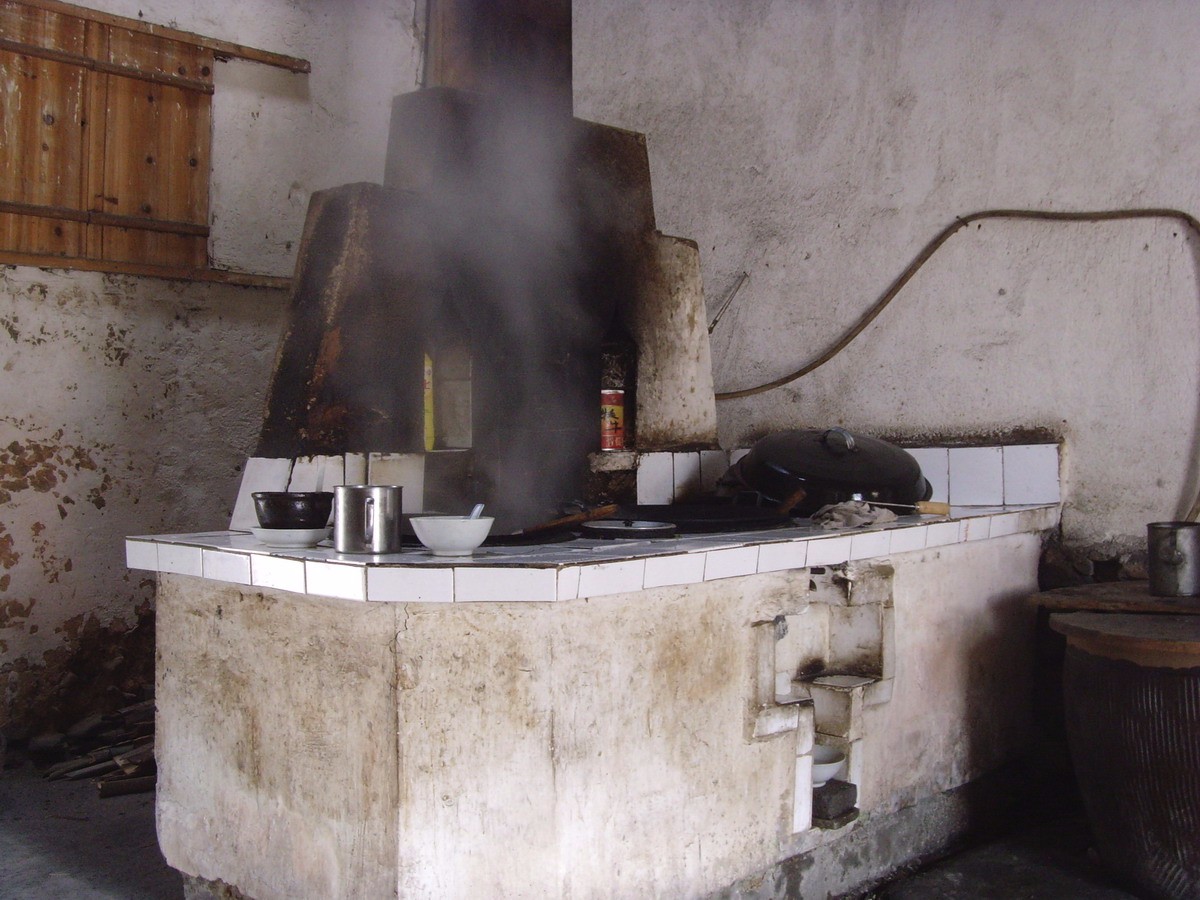
In my memory, and according to my parents’ recollections, I started trying to cook when I was about five years old. At that time, electric rice cookers were not yet widespread, and we used traditional stoves fueled by firewood. The basic steps for cooking rice with firewood were as follows:
1. Wash the rice, add a generous amount of water, and start the fire;
2. Once the water boils, pour out the excess water;
3. Continue to simmer for a short while, then extinguish the fire.
The excess water poured out in step 2 is the protagonist of this article—“rice water” (mi tang).
In traditional views, people believed that rice water was not only rich in nutrients but also had many miraculous effects; some even claimed it was comparable to ginseng soup. Of course, I don’t intend to delve into how much truth there is to these claims here, but at the very least, it is certain that rice water tastes quite good. With the popularization of electric rice cookers, rice water gradually faded from people’s sight. Only when people occasionally remembered it or had special needs would they specifically boil some rice to make rice water to drink.
What I never expected was that with the rise of low-sugar diets, rice water has returned under a high-end concept: the “low-sugar rice cooker” or “low-starch rice cooker” mentioned at the beginning of this article. The principle of these rice cookers is very simple: a container with fine holes is added to the inner pot of the rice cooker, and the rice is placed inside to cook. Some products might be more integrated, but the principle is the same. They also share one common trait—they are “expensive”—two or three hundred yuan is considered the cheapest; slightly more expensive ones are six or seven hundred, and the even pricier ones can cost over a thousand.
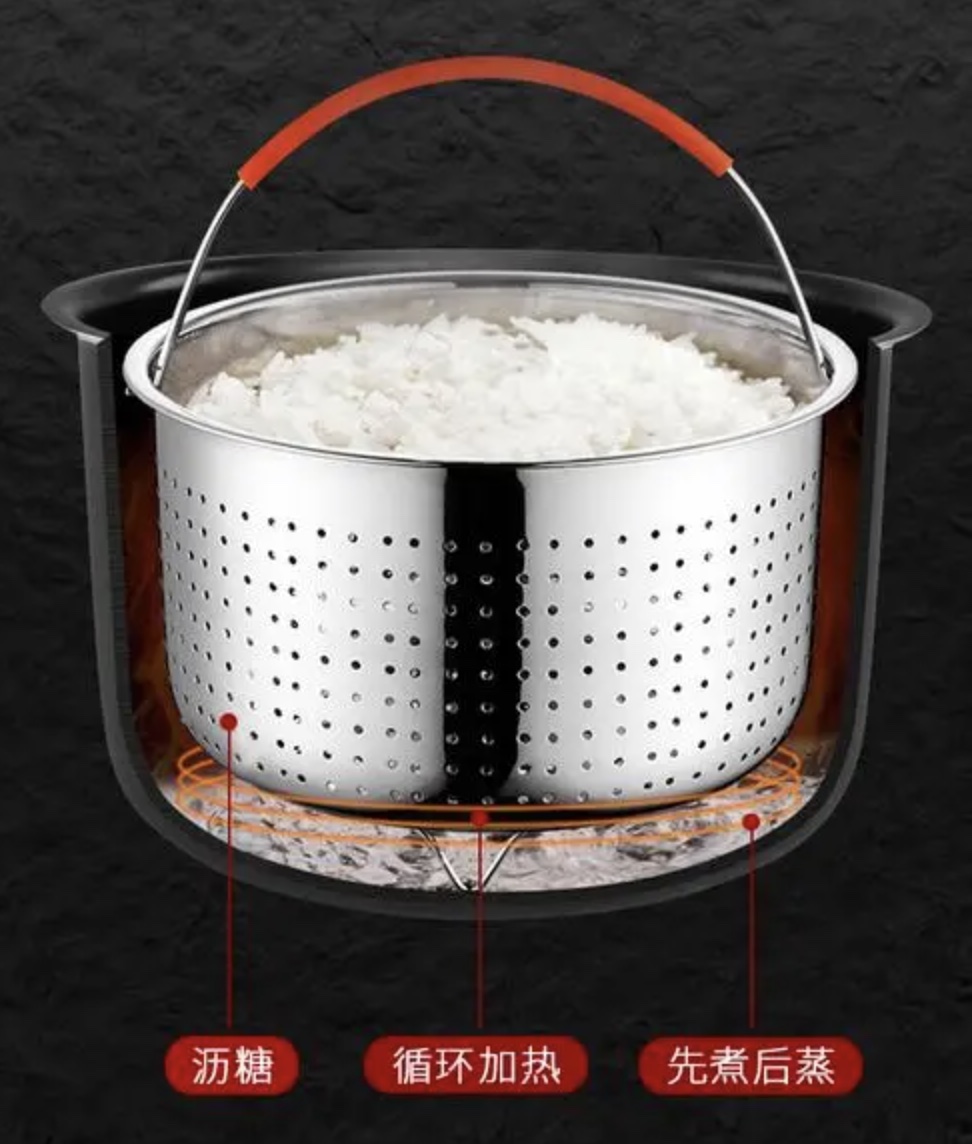
Students who are interested in drinking rice water like I am don’t need to consider buying these rice cookers at all. You only need to spend a dozen yuan on PDD to buy a stainless steel steaming basket of the appropriate size and put it into your existing rice cooker. It is compatible with almost all rice cookers. Instructions on how to cook and how much water to add are usually available on the purchase page. The only thing to remind you is that when using a conventional rice cooker with this method, the cooker usually cannot turn off automatically because there is always water remaining in the inner pot. The solution is to observe it during the first use, determine a cooking time, and then set an alarm every time thereafter to turn it off manually. In this way, I successfully tasted the flavor of my childhood—simple, convenient, and saving several hundred yuan.
Occasionally rambling about life serves as a reminder to myself that this used to be a lifestyle blog, and to remind myself to pay more attention to life. I hope passers-by will simply read this with a smile.
When reposting, please include the original address of this article: https://kexue.fm/archives/10240
For more detailed reposting matters, please refer to: “Scientific Space FAQ”