Recently, I have fallen into the "pit" of fishkeeping and set up a 60cm \times 40cm ultra-white tank, primarily for co-habiting turtles and fish. Personally, I pursue a natural and bionic approach, hoping to establish a relatively stable ecological environment within the tank. Of course, these are all excuses; the fundamental reason is that I am too lazy to change the water or wash filter cotton. Therefore, I thought about relying on the ecosystem’s own purification capacity to extend the interval between water changes. To this end, I referred to online materials to set up an "Equal-path Undergravel Filter" (UGF) and made some modifications based on my own experience.
Equal-path Undergravel Filter
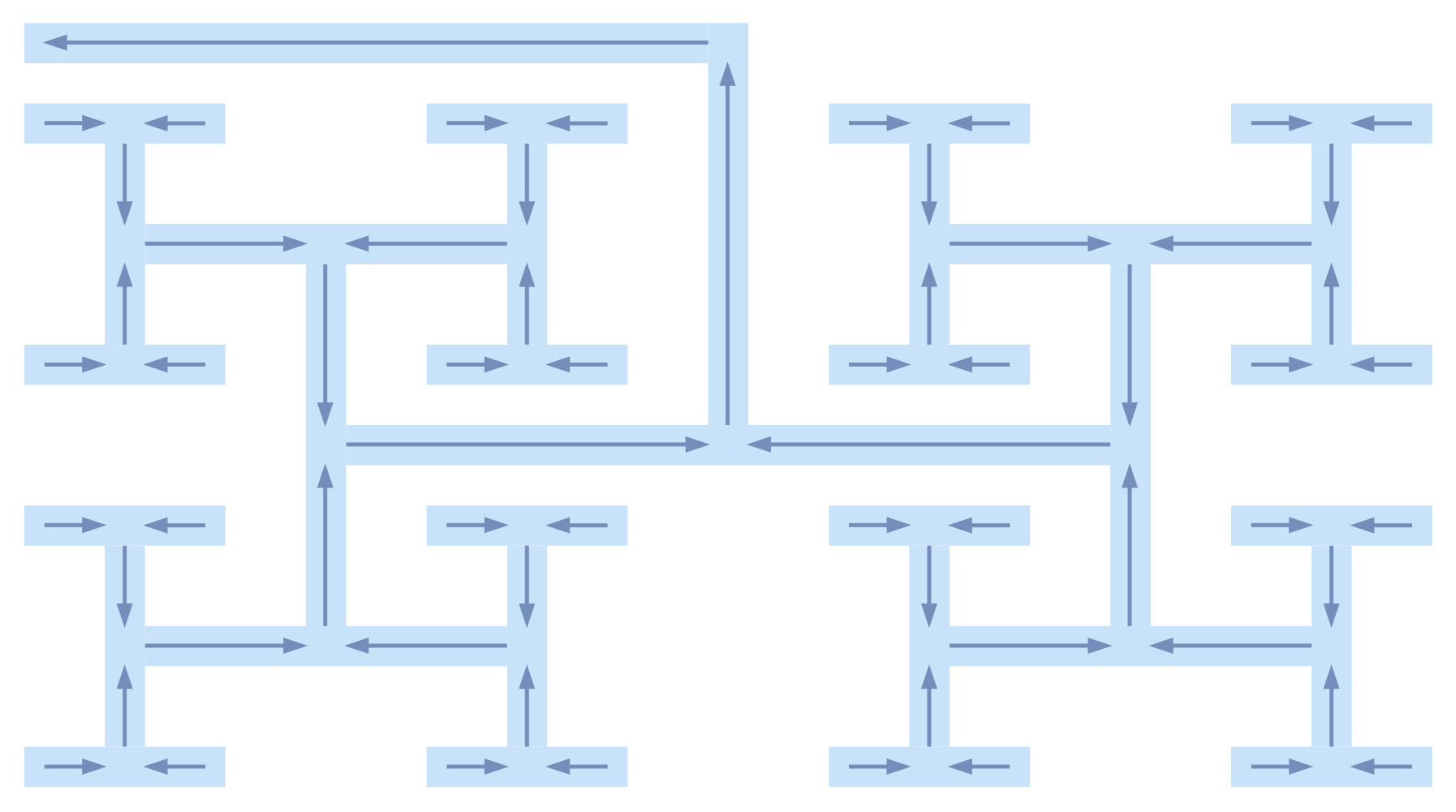
Simply put, an Equal-path Undergravel Filter consists of pipes buried under the substrate. Its characteristic is having one water outlet and multiple water inlets, where the distance from each inlet to the outlet is equal ("equal-path"), and these inlets are distributed as evenly as possible. By burying such pipes under the substrate and using a water pump to extract water from the outlet, the suction at each inlet remains identical due to the equal-path design. This achieves uniform water extraction from the substrate, effectively activating the substrate. This is the concept of a (suction-type) Equal-path Undergravel Filter. The design is implemented using an "H-shaped" (or "I-shaped") pipe structure, as shown below (doesn’t it have a fractal feel to it?):
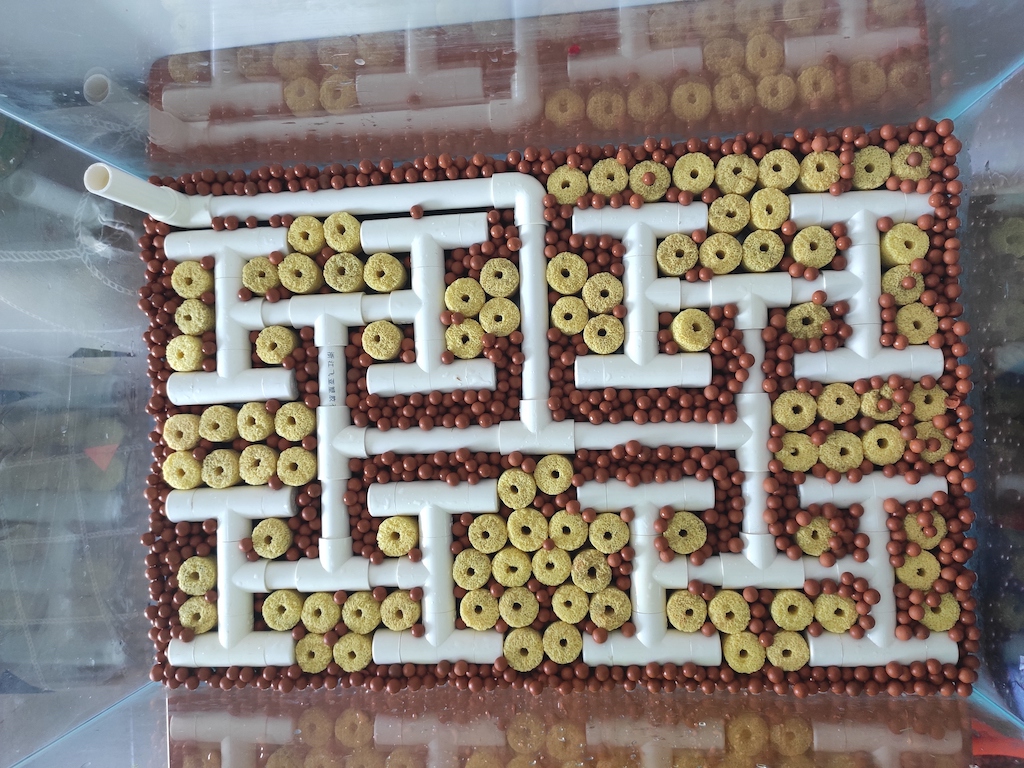
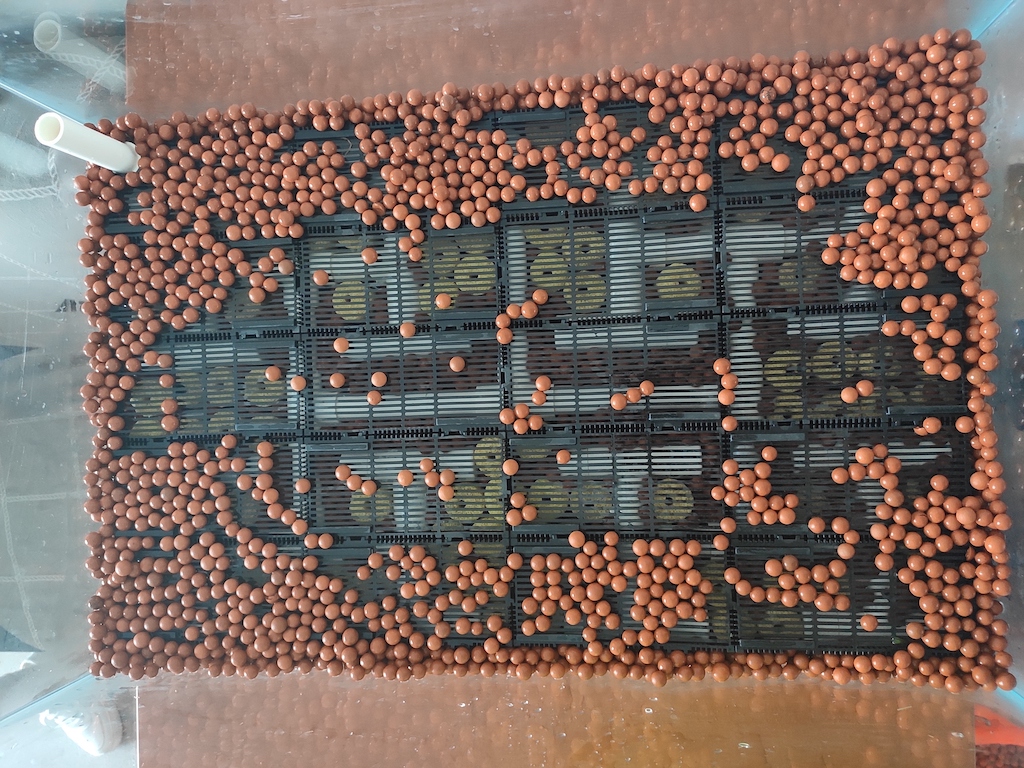
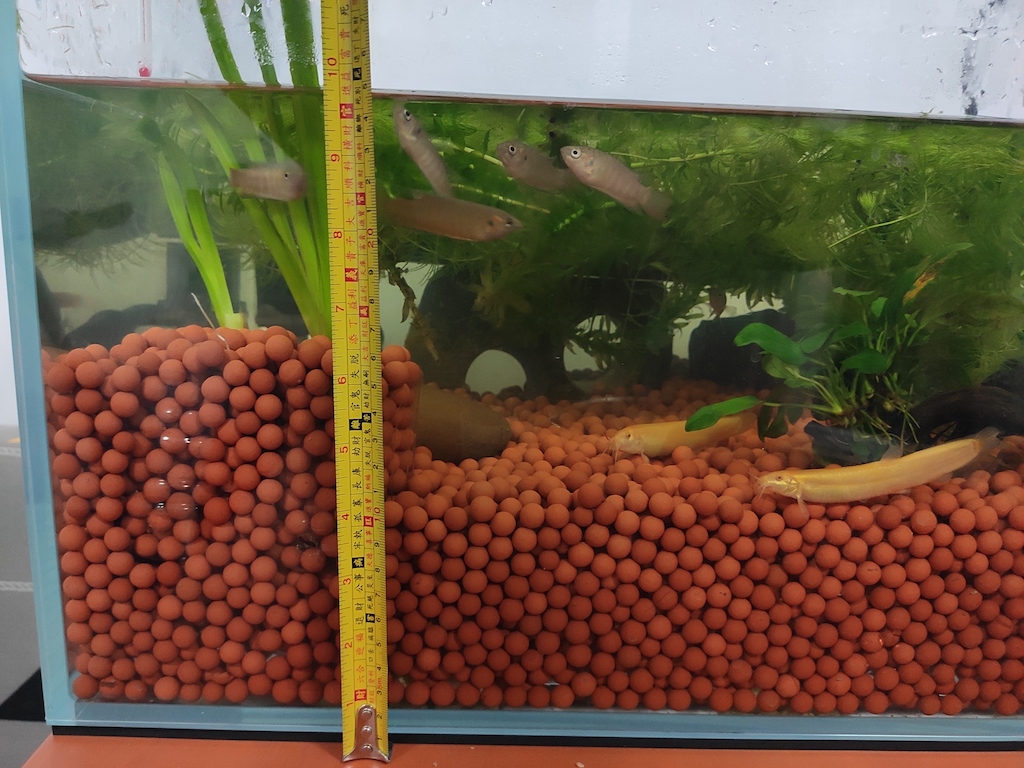
There are already many tutorials online for making Equal-path Undergravel Filters. My main difference is that I replaced all the substrate with 1cm-sized ceramsite (expanded clay pebbles), totaling about 20kg (40 jin). Ceramsite can be used both as substrate and as filter media. It has a porous structure that can be used for water purification and bacterial cultivation. In contrast, conventional undergravel filters often use substrates like iron-sand, which do not serve this purpose. Additionally, I chose ceramsite because its size is uniform and appropriate, allowing it to fill the gaps between the pipes. From the outside, it looks like just a thick layer of ceramsite substrate, giving it a sense of "hidden mechanics" while remaining simple and aesthetic.
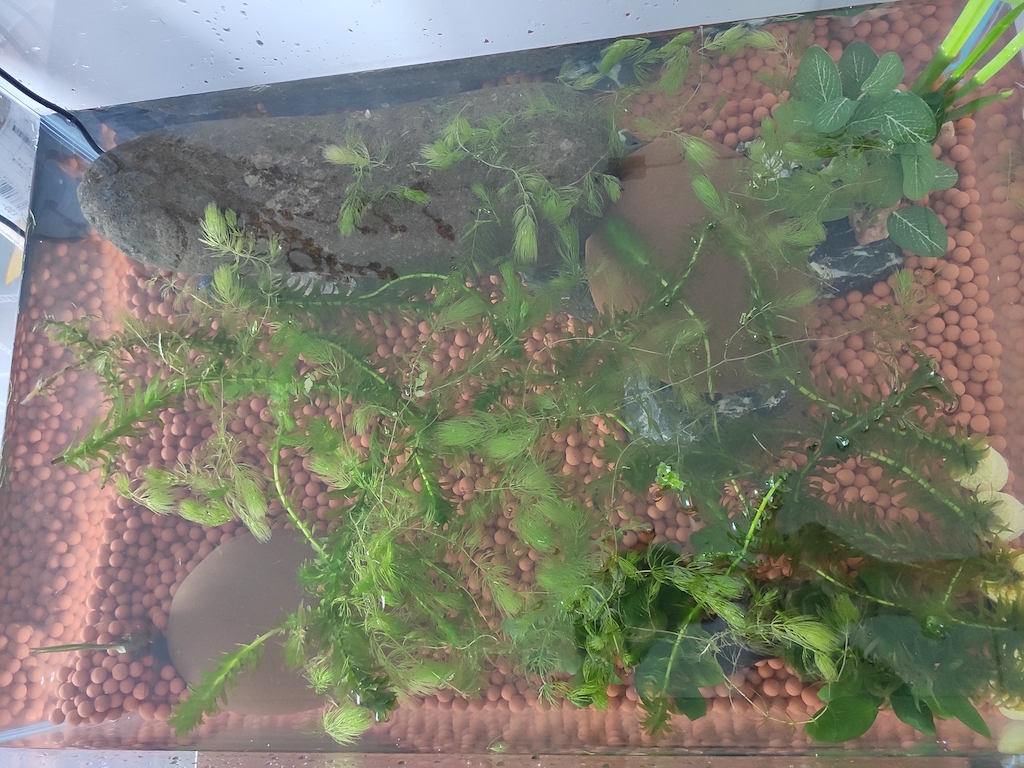
Tank Landscape
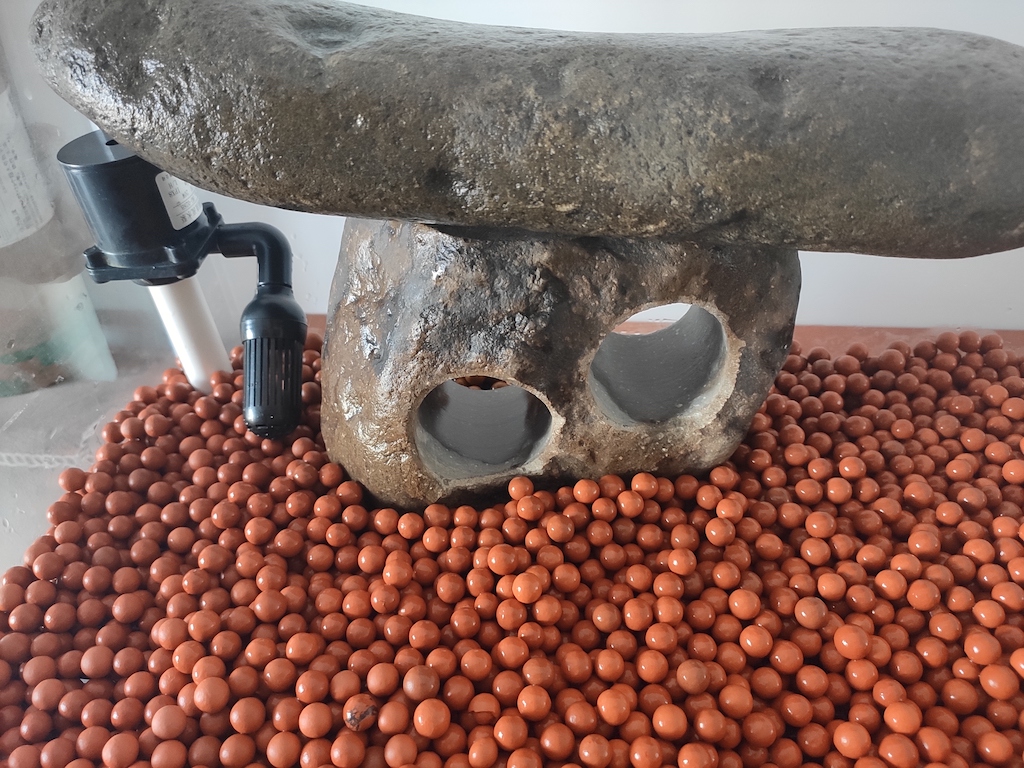
It is not difficult to understand that the Equal-path Undergravel Filter itself does not have a filtering effect; it only promotes the attachment of particles in the water to the substrate, and this is the only function I require from it. The water coming out of the pump flows directly back into the tank without passing through any other filters, so there is no issue of washing filter cotton. Since both the ceramic rings and the ceramsite have adsorption properties, keeping the water clear is not a problem (as long as the substrate is not disturbed). Furthermore, both possess bacterial cultivation properties, allowing for the growth of enough beneficial bacteria (such as nitrifying bacteria) to complete the decomposition of harmful substances like ammonia and nitrite. Additionally, there are water plants in the tank, which also absorb ammonia and nitrogen. Consequently, the water change cycle can be greatly extended—basically, just changing a little bit every one or two months is sufficient.
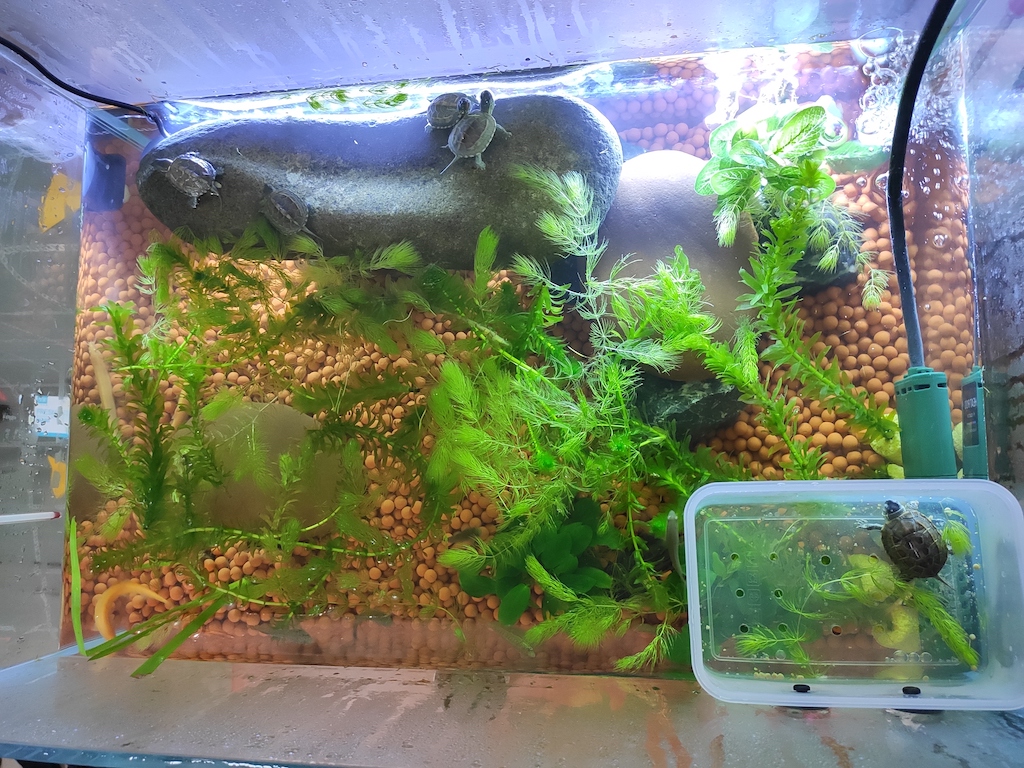
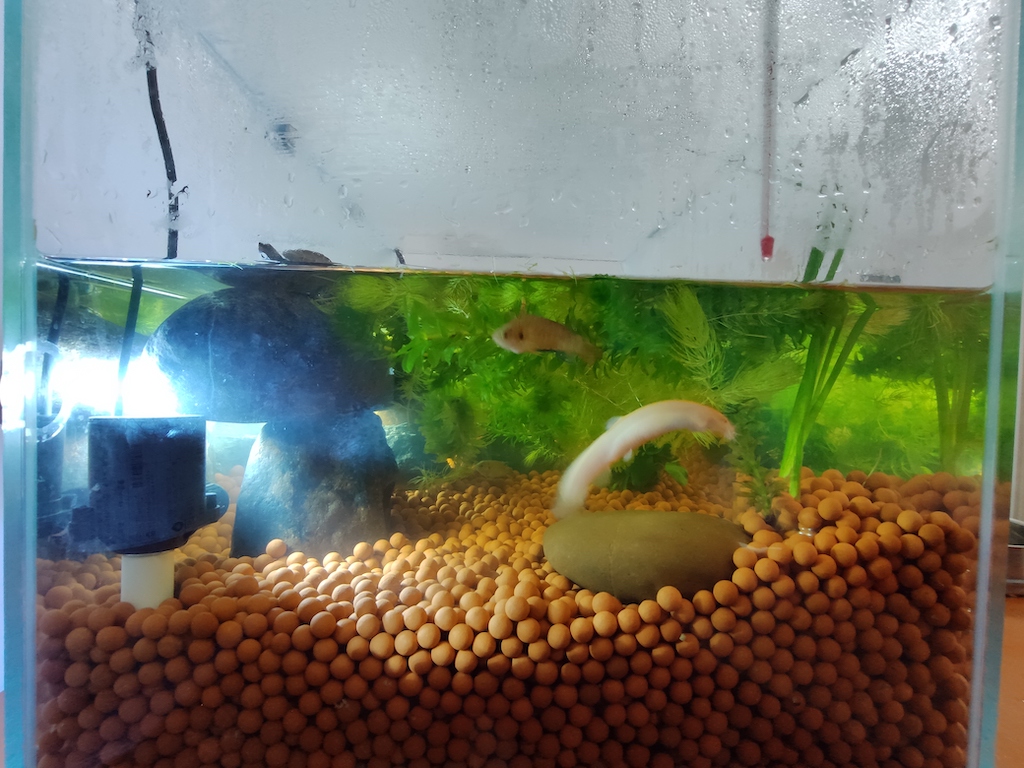
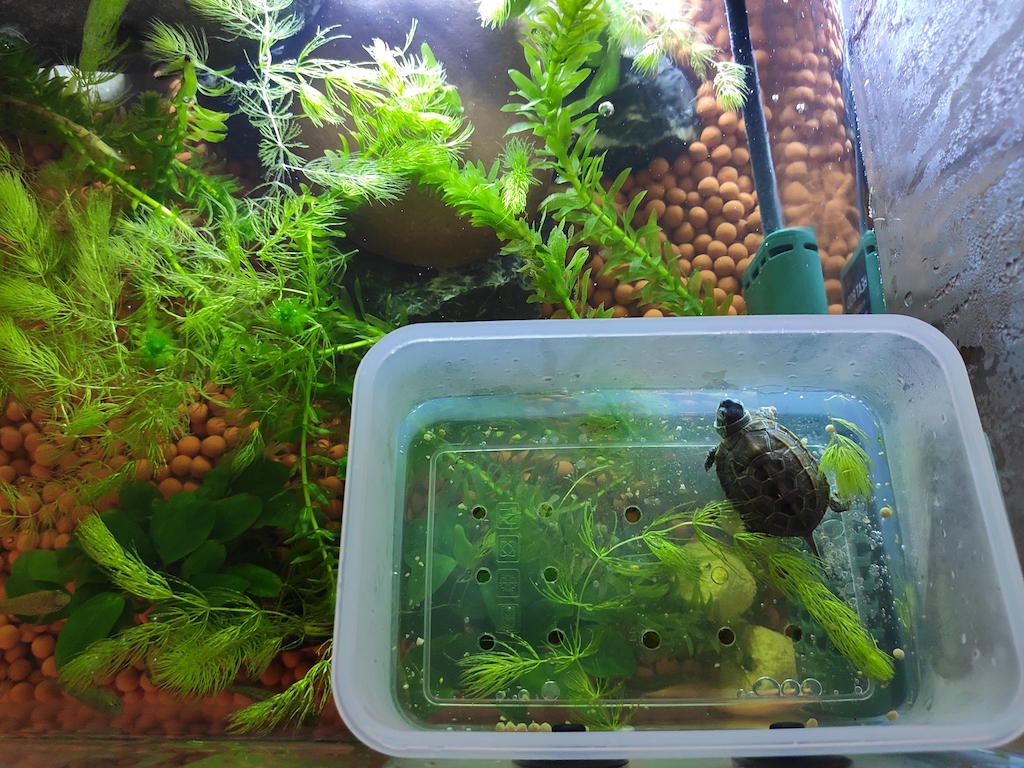
Currently, the tank houses 5 Reeve’s turtle hatchlings, 8 Chinese paradise fish, and 4 small loaches. I plan to add some freshwater clams and cherry shrimp later. The water plants include Anacharis (Egeria densa), Hornwort, and Sweet Flag. The Sweet Flag is fixed using a plastic bottle, while the others are basically just thrown into the water, primarily for water purification; aesthetics are secondary for now. One of the small turtles has developed skin rot on its foot, so I made a DIY isolation box to keep it separate; otherwise, it keeps getting bullied by the paradise fish. This is the current status.
When reposting, please include the
original address of this article:
https://kexue.fm/archives/7961
For more detailed information
regarding reposting, please refer to:
"Scientific Space FAQ"