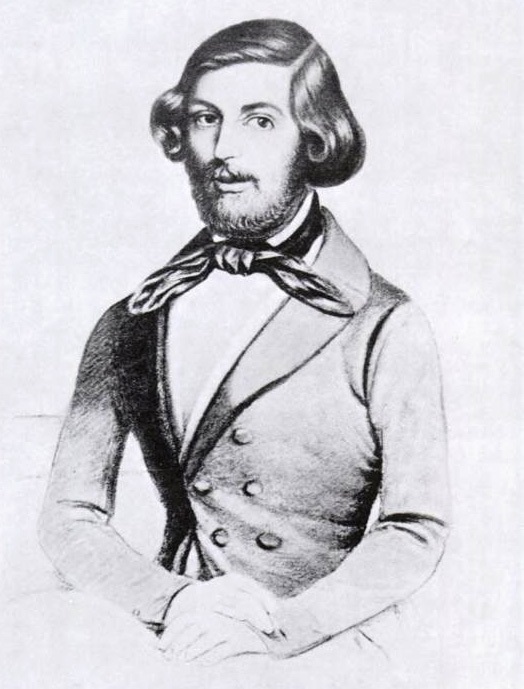
It is time to march towards the case n=3. To prove this case, we need a new ring of numbers: Eisenstein integers. Eisenstein was a famous German mathematician. His contemporary, Gauss, once remarked: “There have been only three epoch-making mathematicians: Archimedes, Newton, and Eisenstein.” This shows Eisenstein’s remarkable achievements. In fact, reading the history of research on Fermat’s Last Theorem is also like reading a Who’s Who of mathematics—without advanced mathematics, it is almost impossible to make any contribution to Fermat’s Last Theorem.
Basic Definition
Like Gaussian integers, Eisenstein integers are a type of complex integer. While Gaussian integers use 1 and i as a basis (where i is a fourth root of unity, a non-real root of x^4-1=0, thus they are also called quartic cyclotomic integers), Eisenstein integers use 1 and \omega as a basis. Here, \omega is a cube root of unity, a non-real root of x^3-1=0. Any Eisenstein integer can be written as a+b\omega, where a,b \in \mathbb{Z}. The ring of Eisenstein integers is denoted by \mathbb{Z}[\omega], also known as the ring of cubic cyclotomic integers.
One might want to write \omega explicitly using the imaginary unit i, or worry about which of the two non-real cube roots to use. However, this is unnecessary. Since we only consider numbers of the form a+b\omega, we do not need i at all. We only need to remember that \omega^2+\omega+1=0 to establish the operations in \mathbb{Z}[\omega]. For example: \begin{aligned} (a+b\omega)(c+d\omega) &= ac+(bc+ad)\omega+bd\omega^2 \\ &= ac+(bc+ad)\omega+bd(-\omega-1) \\ &= (ac-bd)+(bc+ad-bd)\omega \end{aligned}
In particular, we call a+b\omega^2 the conjugate of a+b\omega. According to this definition, the conjugate of a+b\omega^2 is a+b\omega (Why? Readers are encouraged to prove this within \mathbb{Z}[\omega] without using i). Next is the definition of the norm: N(a+b\omega) = (a+b\omega)(a+b\omega^2) = a^2-ab+b^2 Why define it this way? First, the norm must be a real number. Second, the norm must be multiplicative, satisfying N(\xi\eta)=N(\xi)N(\eta). From the structure of (a+b\omega)(a+b\omega^2), we see that this is the product of a+b\omega with its images under all non-real roots of unity, which must result in a real number. Why? If we factor a^3+b^3 in the complex field, we first solve a^3+b^3=0 to get a=-b\omega^k for k=0,1,2. By the factor theorem, a^3+b^3=(a+b)(a+b\omega)(a+b\omega^2), so (a+b\omega)(a+b\omega^2) is a real number. Furthermore, it is clear from the definition that such a function is multiplicative.
Eisenstein integers have six units (N(\xi)=1): \pm 1, \pm\omega, \pm\omega^2. Note that because \omega^2+\omega+1=0, units can have different expressions, such as 1+\omega and 1+\omega^2.
The concept of divisibility is similar to that of Gaussian integers and rational integers. Two Eisenstein integers are associates if they differ only by a unit factor. With divisibility, one can define common divisors, the greatest common divisor, and the concept of being coprime. Finally, an Eisenstein prime is defined similarly to Gaussian primes: if in \mathbb{Z}[\omega], \xi=\lambda\eta implies N(\lambda)=1 or N(\eta)=1 (but not both), then \xi is an Eisenstein prime.
Unique Factorization Theorem
As with Gaussian integers, the most important property of Eisenstein integers is that they satisfy the Unique Factorization Theorem! To prove this, one only needs to show that it is a Euclidean domain. For any Eisenstein number a'+b'\omega where a',b' \in \mathbb{R}, there exists an Eisenstein integer a+b\omega such that: N(a'+b'\omega - a - b\omega) < 1 This is easily satisfied by taking the floor of a' and b', because for any non-negative x,y < 1, x^2-xy+y^2 < 1. The fulfillment of this condition implies it is a Euclidean domain. The rest of the proof follows that of Gaussian integers.
Congruence Properties
In \mathbb{Z}[\omega], 2 is the Eisenstein prime with the smallest norm, but since Eisenstein integers are cubic roots of unity, we consider the basic congruence properties of the prime 1-\omega (with norm 3), as its congruences are closely related to cubes. The following properties are listed without proof:
1. 1+2\omega and 1-\omega^2 are associates of 1-\omega; (1-\omega)^2 = -3\omega and (1-\omega)^4 = 9\omega^2.
2. 1-\omega \mid a+b\omega if and only if 3 \mid a+b, where a,b \in \mathbb{Z}.
3. If 1-\omega \nmid a+b\omega, then (a+b\omega)^3 \equiv \pm 1 \pmod{9}.
When reposting, please include the original address: https://kexue.fm/archives/2900
For more details on reposting, please refer to: Scientific Space FAQ