
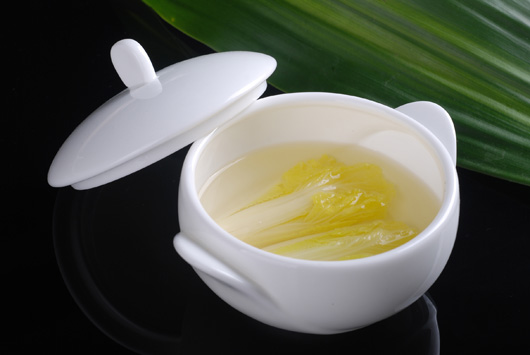
If I were to use cooking as a metaphor for life, I believe one of the highest realms of existence is “Cabbage in Supreme Soup” (Kaishui Baicai).
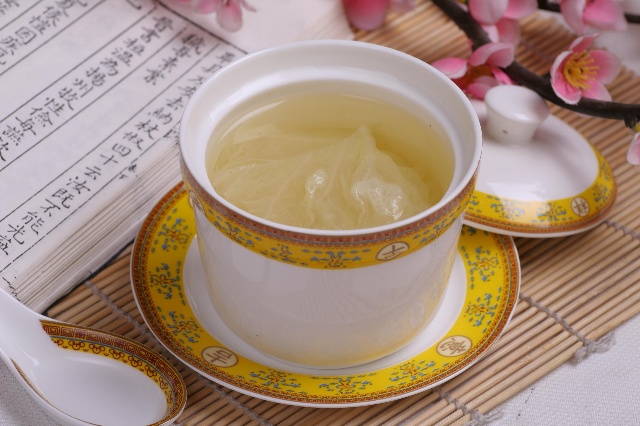
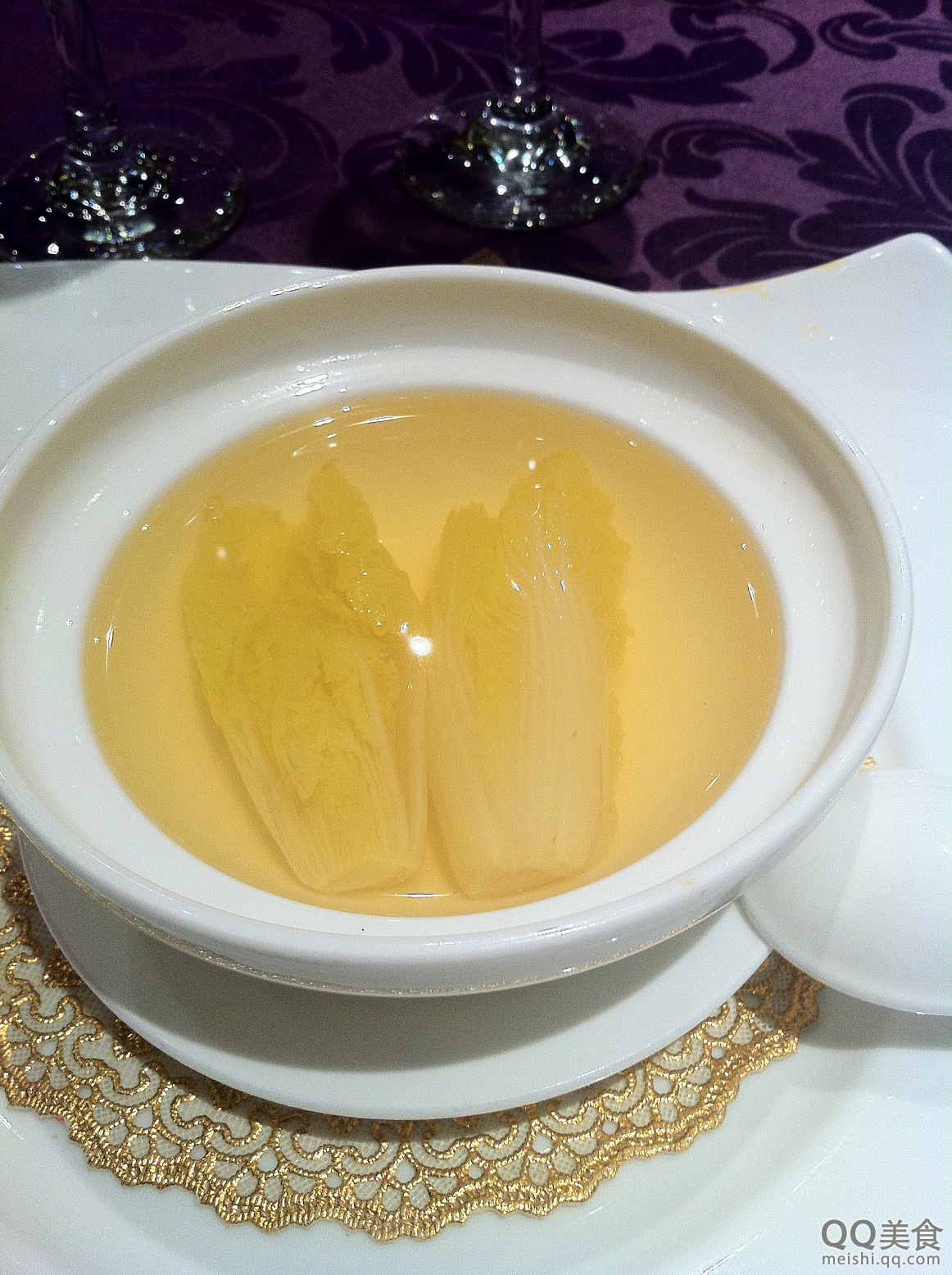
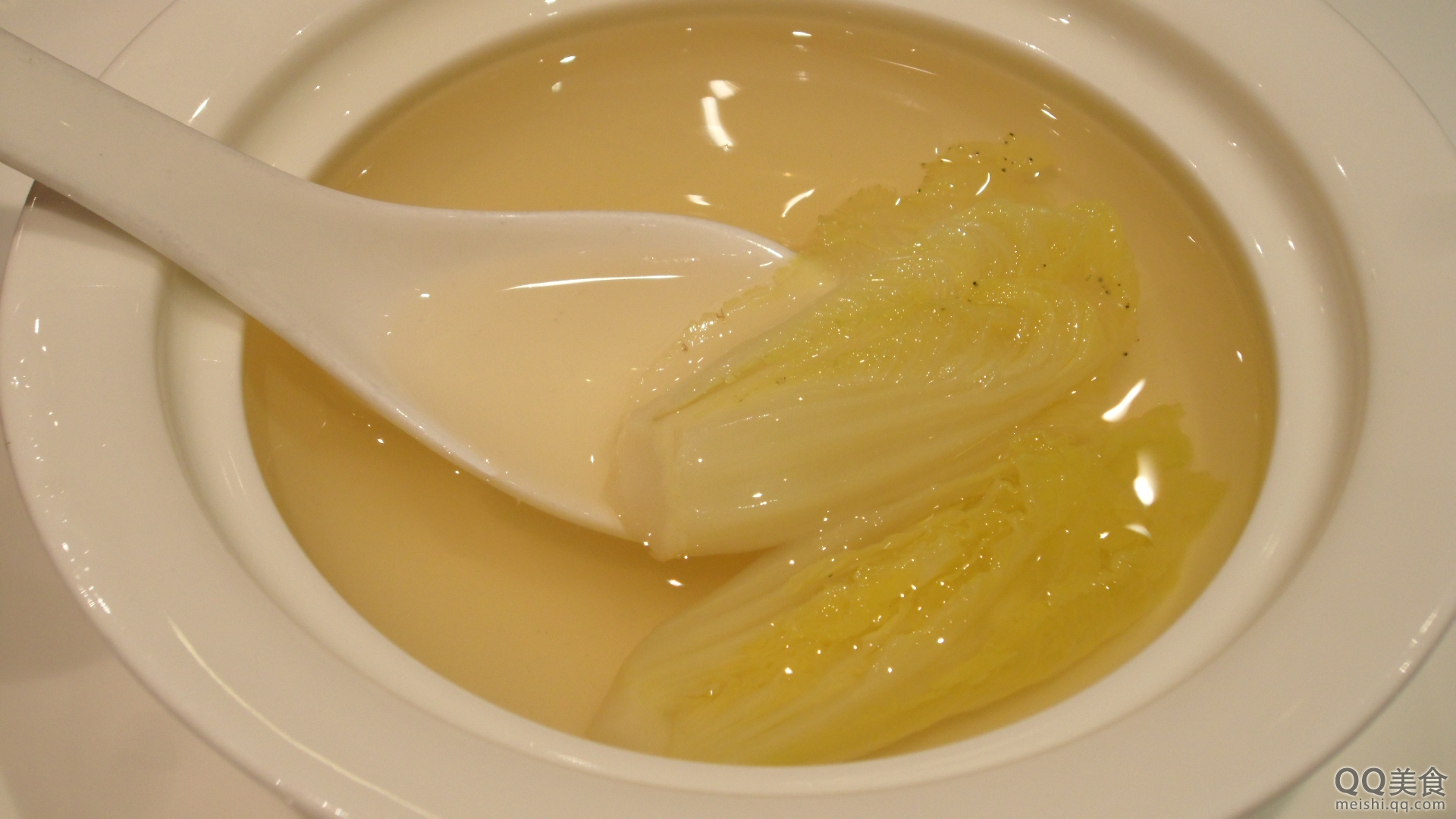
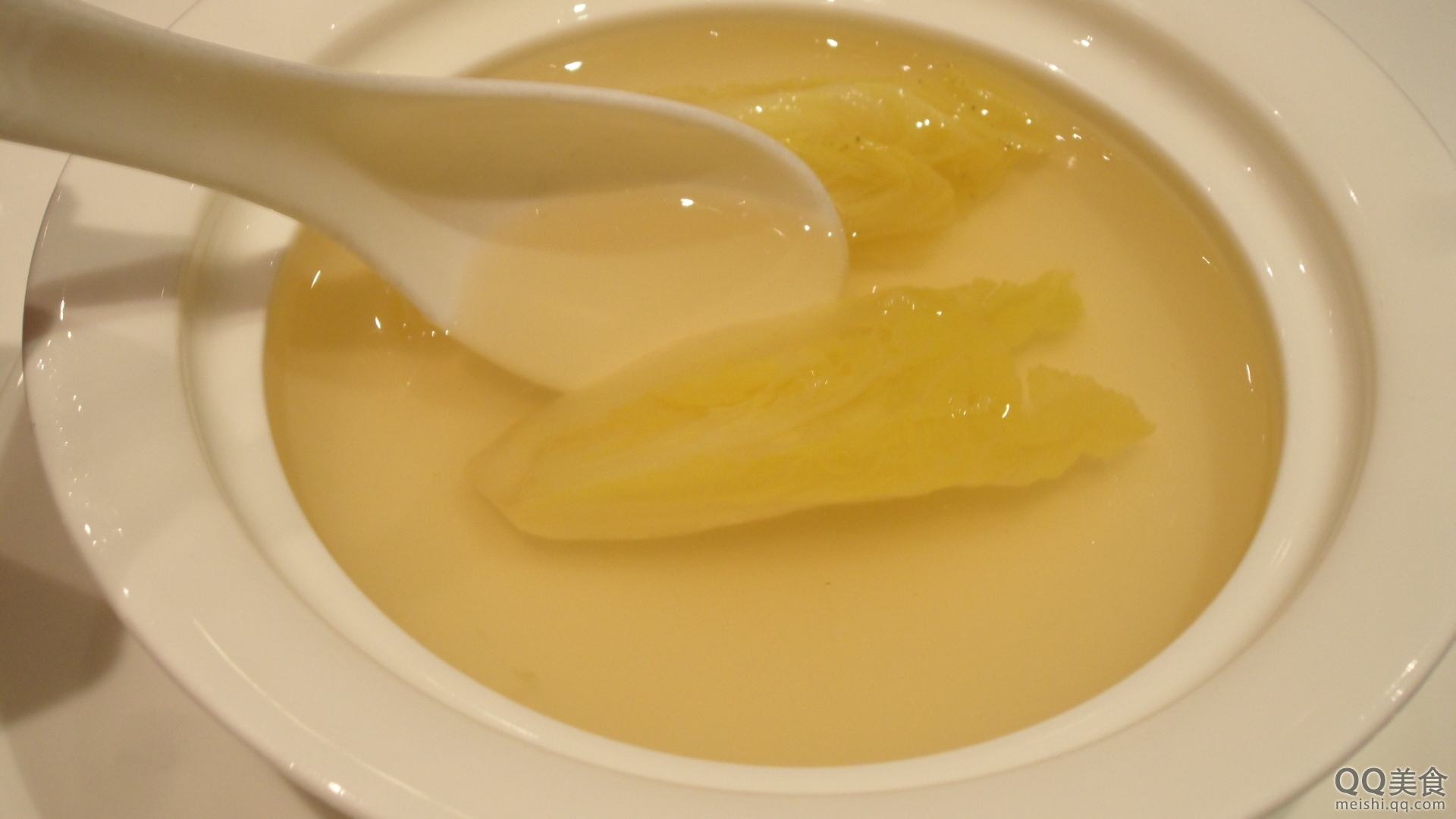
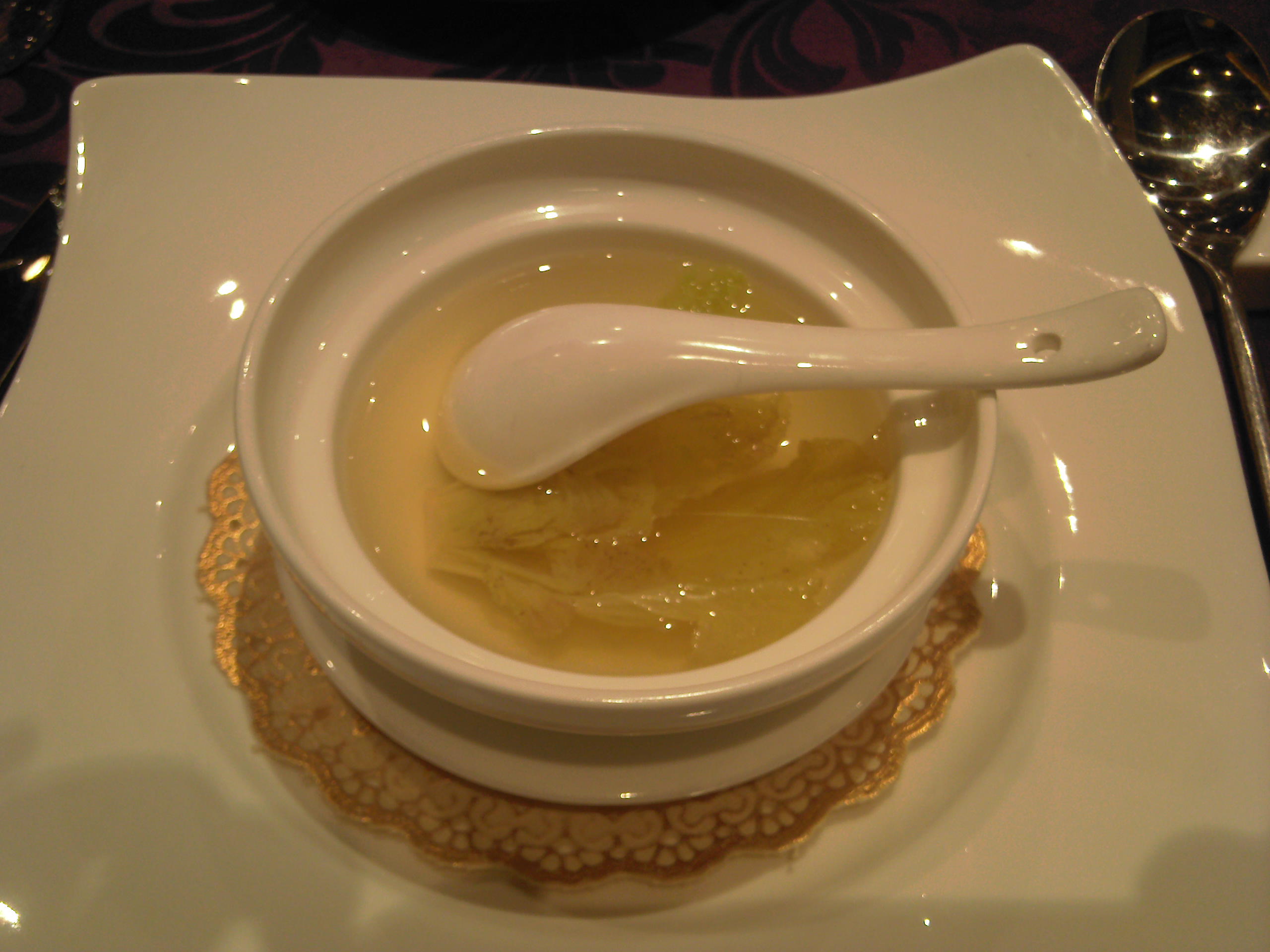
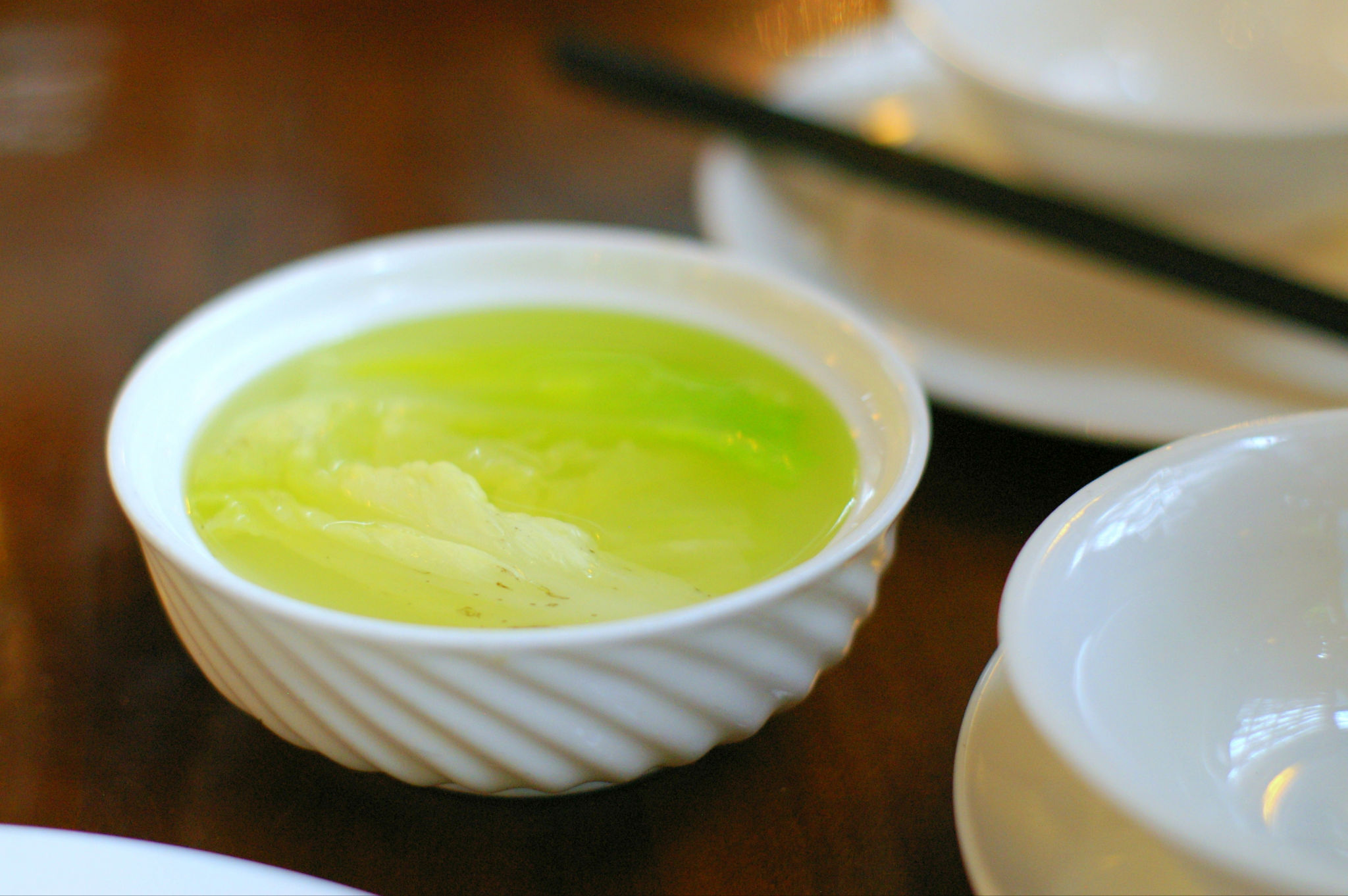
The so-called “Kaishui” (literally “boiling water”) is actually a top-tier clear soup that looks as transparent as water. Cabbage carefully prepared with this “water” becomes the dish known as Cabbage in Supreme Soup. I praise it for two main reasons: first, it gives a sense of surprise and victory through ingenuity—nothing is more brilliant in life than this. Second, it transforms ordinary cabbage into a top-tier delicacy, showing true mastery within simplicity, which is the ultimate philosophy of Sichuan cuisine. To quote the movie Kung Fu Chefs: “Cabbage is the most common thing. Often, the more common something is, the easier it is to overlook. It is like our family members; we feel nothing normally, but once lost, we feel its intimacy.” This is the truest portrayal of life. At the same time, it implies that doing ordinary things well is the highest realm of life. Furthermore, at first glance, Cabbage in Supreme Soup looks like a few cabbage hearts soaking in plain water without a single drop of oil, but in the mouth, it is fragrant, crisp, and refreshing. It is, in fact, a high-end clear soup dish. It is only because the soup is as clear as water that it is given such an unremarkable name. Not calling it “Supreme Soup Cabbage” is a deliberate play on expectations; one should not judge a dish by its name, just as one should not judge a person by their appearance.
Some readers might think, “Such a complex dish is unaffordable for us commoners!” or “It’s just a cabbage, it tastes the same however you eat it.” I feel that, at least for kitchen enthusiasts, this dish is not just about the food; it is a feeling, a pursuit. In fact, I believe most people can reach a level of living where they are warm and well-fed. Beyond that, I think one should have their own pursuit in life—that is, not seeking great wealth, but seeking to live as oneself. To me, Cabbage in Supreme Soup feels like doing what you love in your own world.
Of course, I certainly do not know how to make Cabbage in Supreme Soup myself. This article is merely an introduction, similar to a popular science piece. I have only made a simplified version once, and I didn’t even taste it myself. However, when the holidays come, I will give it a proper try.
The Story
It is said that this dish was created by the famous Sichuan chef Huang Jinglin while he was in the Qing Dynasty’s Imperial Kitchen. Later, Huang brought the recipe back to Sichuan, where it became widely circulated. Over 30 years ago, the Sichuan cuisine master Luo Guorong was transferred to the Beijing Hotel to lead the kitchen, and he brought the cooking techniques of “Cabbage in Supreme Soup” back to Beijing. This was a featured dish in Empress Dowager Cixi’s family banquets.
There are many stories about Cabbage in Supreme Soup. When Premier Zhou Enlai hosted Japanese VIPs, a female guest saw that the dish served was just a bowl of clear water with a few pieces of cabbage floating in it. Thinking it would be bland and tasteless, she was reluctant to pick up her chopsticks. After several invitations from Premier Zhou, she reluctantly took a small spoonful of the soup. To her amazement, she was immediately stunned and began to eat heartily, not forgetting to ask the Premier: Why can cabbage boiled in plain water be so delicious? When Premier Zhou hosted U.S. Secretary of State Henry Kissinger, he invited him to taste it as well. Kissinger was exceptionally excited after tasting it and praised it repeatedly. When Comrade Deng Xiaoping first ate Cabbage in Supreme Soup, he also praised it: “Good dish! Good dish! This dish only exists in heaven.” It is also the favorite state banquet delicacy of President Hu Jintao.
In the Records of the Sichuan Restaurant, it is written: “Cabbage in Supreme Soup became a masterpiece, prepared seven times in the Great Hall of the People for state banquets, showcasing culinary skills; three times in Zhongnanhai for Chairman Mao’s banquets to treat distinguished guests; ten times in Wenjin Street to reward elites with delicacies. Its fame is illustrious, leaving rivals in awe; it is the crown of the capital, known throughout the nine provinces and four seas.”
I first saw Cabbage in Supreme Soup in the movie Kung Fu Chefs. Among many culinary movies and TV shows, two dishes have remained unforgettable to me: one is the Cabbage in Supreme Soup in Kung Fu Chefs, and the other is the “soup drunk with a fork” that appeared in the first episode of the old TV series The Wedding Game. You don’t even need to taste it; just a brief look at the preparation steps tells you that this dish is truly the “finest among the fine.”
(The information in this article is mostly collected and organized from the internet.)
The “Boiling Water” (The Soup)
1. The so-called “Kaishui” (boiling water) is made by taking old hen, old duck, pork trotters, ham, ribs, dried scallops, and even abalone (some chefs also add yellow mushrooms, the “king of umami”). These are blanched in boiling water to remove blood and impurities, washed, and then placed in a pot with plenty of fresh water, ginger, and green onions. After boiling, the foam is skimmed off, cooking wine is added, and the heat is reduced to a simmer without boiling over. During this time, foam is constantly removed, and the soup is simmered slowly for at least 4 hours until the umami is extracted, resulting in a clear soup with some suspended solids. [Key point 1: The heat must be low. High heat turns the soup white, and you’d end up with Milky Soup Cabbage. Key point 2: Water must be added all at once; no water can be added midway, otherwise the meat will contract upon meeting cold water, preventing amino acids from dissolving, and the soup will lose its freshness, ruining the pot.]
2. Take lean chicken breast (you can use lean pork first, then chicken breast) and grind it into a fine paste (mince). Mix the meat paste with cold fresh soup until it reaches a soy-milk-like consistency, then pour it into the boiling fresh soup. At this moment, a miraculous sight occurs: the impurities in the soup scramble to adhere to the meat paste, gradually forming a ball-like mass. After about 10 minutes, the ball is removed and discarded. This process is repeated 2–3 times until the soup is clear of oil and impurities, looking like plain water—transparent and slightly yellow. This process takes one or two hours, during which a fine mesh strainer is used to help clear the foam. [I have tried this myself; the raw meat paste indeed acts like activated carbon, absorbing many impurities and pigments.]
3. Finally, there is “stabilizing the soup,” which Sichuan chefs call “Diao Tang” (hanging the soup). The meat paste ball from step 2 is wrapped in white gauze and simmered in the soup pot for about an hour to release the final essence of the meat and increase the umami. The soup must be rich in flavor but clear as water.
The Cabbage
1. Although it is called cabbage, only the yellow, tender heart in the middle of the Chinese cabbage is used. The heart is best when it is just about to mature but not yet fully grown. Wash it clean.
2. Take a portion of the “boiling water” and control the temperature at around 70–80 degrees Celsius. Soak the cabbage root in the prepared soup to soften the outer stems. Then, gently peel back 4 or 5 leaves without breaking them from the root. Lay it flat on a mesh strainer and use a fine silver needle to repeatedly pierce the cabbage heart. [The silver needle must be fine so as not to damage the appearance of the cabbage. After piercing, the flavor can fully penetrate the cabbage.]
3. Place the cabbage in a ladle and pour the prepared hot “boiling water” over the top. The cabbage will gradually spread out like flower petals from the heat. When the soup in one pot is almost finished, switch to another pot and continue. Once the outermost stems are completely soft and cooked, place the cabbage in the serving container and slowly pour in fresh “boiling water.” The soup used to blanch the cabbage, though still a high-quality fresh soup, can no longer be used to serve the final dish.
This article is not a recipe; the descriptions here are just the main steps. Even so, one can see the extraordinary origin of the soup. How much do you think a bowl of such soup costs? (It is said that at Tan’s Family Restaurant, Cabbage in Supreme Soup costs 400 yuan for a small bowl, about the size of a covered teacup.)
Simplified Version
A much simpler method is to place the cabbage heart flat in a bowl, add soup and seasonings, and steam it in a steamer. After steaming, pour out the water, place it in a soup bowl, and add fresh soup. Although this saves trouble, the shape and taste are much inferior.
====================
Note 1: Clear Soup
Clear soup is one of the high-end stocks commonly used in Sichuan
cuisine. Because different dishes have different requirements, the
color, flavor, and quality of clear soup vary. Quality is divided into
general and specially made; color and flavor vary from deep to shallow
and thick to light. The one used for “Cabbage in Supreme Soup” is a
specially made clear soup with a light color and fresh taste. To make
high-end clear soup, use one old hen, one duck, 1250g each of ribs,
marrow bones, and fresh lean pork, 150g of chicken breast, and
appropriate amounts of green onion, ginger, Shaoxing wine, and Sichuan
salt. During preparation, first wash the chicken, duck, ribs, and marrow
bones and boil them in a pot. Skim off the foam, then add the crushed
ginger, knotted green onions, Shaoxing wine, and salt. The lean pork and
chicken breast are pounded into a paste with the back of a knife. First,
mix 150g of pork paste with 250g of fresh water, pour it into the soup,
and when the meat paste floats, skim the foam and remove the meat paste,
shaping it into three or four meat patties for later use. Then, pour all
the boiled soup into a container, remove the chicken, duck, and ribs,
wash them with fresh water, and put them back into the soup. Add the
meat patties and boil over high heat, then move to a very low heat so
the soup is in a near-boiling state. At this time, the soup color is
like Shaoxing wine, clear and fragrant. If there is any oil, remove it
immediately, and the soup is ready.
Note 2: Cixi
Cabbage in Supreme Soup was a specialty in Empress Dowager Cixi’s family
banquets. It was created by the famous Sichuan chef Huang Jinglin in the
Imperial Kitchen. Cixi praised it endlessly. The “boiling water” made by
the imperial chefs used 10 catties of imperial chicken to make 10
catties of chicken soup over 10 hours. Then, this soup was used with
another 10 catties of imperial chicken to simmer for another 10 hours.
After removing the meat residue, 8 catties of “high stock” were
obtained. Chicken breast was minced into a paste and used three times to
clarify the stock until it looked like water, but without losing any
umami. The method for this dish involves removing the large leaves of
high-quality cabbage, leaving only the most tender part, using the
“boiling water” to blanch it (to remove the raw vegetable taste), then
placing it in a cup with the soup and steaming for half an hour. This
allows the cabbage to fully absorb the umami of the chicken soup, while
the sweet cabbage flavor integrates with the soup. Therefore, when you
taste this dish, you will feel freshness, sweetness, and fragrance—fresh
yet mellow, sweet yet clear. The highest evaluation is that the
fragrance is “not ostentatious.” A sip of the light-colored “boiling
water” actually reaches such a realm!
Note 3: Diao Tang (Clarifying the Soup)
The umami of soup comes from nucleotides and amino acids dissolved in
water. The process of making soup is to let these things move from
chicken, pork, fish, ham, etc., into the water. However, making soup
also produces many small solid impurities, especially ugly gray
particles formed by coagulated proteins, which are the “scum” we often
see when boiling meat. At this time, the chef will mince the chicken
meat used for the soup into a paste, wrap it in gauze, and put it into
the pot. As the proteins in the eggs and meat mince gradually coagulate
over low heat, they form a fine mesh-like protein structure on the
surface of the soup. As the boiling soup swirls up and down, small
impurities reach the surface and stick to the mesh, filtering the soup
from within. This produces a beautiful, translucent high stock. This is
called “Diao Tang.”
Not only do Chinese chefs clarify soup, but French cuisine also has a dish called beef consommé. A French consommé is made by first using meat or bones to make a stock base, then taking another batch of fresh meat and vegetables, mincing them finely, adding egg whites, and pouring them into the stock base to simmer over low heat. The proteins in the meat and egg whites complete the filtration process. Finally, the meat mince is skimmed off and filtered again. The bones used for the clear soup are roasted until golden brown to increase the aroma, so the resulting soup is brownish, crystal clear, and looks like a piece of amber.
Related Reading: The Anthropologist in the Kitchen, Chapter 20
A Bowl of Clear Soup
Today, I made my first Consommé (pronounced like “kon-so-may”). Don’t be fooled by the fact that it’s just a bowl of clear soup; this French clear soup is labor-intensive and took a lot of effort. A good French consommé must start with a good stock. In the “Classic French Cooking Class” a few days ago, I first deboned a whole duck, crushed the duck bones and veal bones, added onions, carrots, and celery, and roasted them until golden. Then I added water and a large handful of fresh herbs, simmered it for half a day over low heat, constantly skimming off the foam until the bones were soft and the meat was tender, and the soup was fresh and thick. After filtering, the whole pot was put in the refrigerator. When I took it out the next day, the soup had set into a jelly-like state, indicating that the gelatin in the bones had been fully released. At this point, I skimmed off the layer of solidified fat on top until it was perfectly clean. This was the preparation for the French consommé.
The next step is “purification”—thoroughly refining the essence. The success or failure of a French consommé lies here. If the oil in the stock is not cleared, or if the water temperature is not controlled during purification, all previous efforts may be wasted. Chef Roberta ordered me to grind half a pound of beef and tomatoes, add four egg whites and crushed eggshells, and mix them into a large bowl of nauseatingly thick meat paste. I poured the meat paste into the lukewarm stock and began to heat it slowly, feeling a slight ache in my heart. It was hard to imagine that this mass of what looked like slop wouldn’t ruin the stock I had worked so hard to simmer. I was ordered to use a whisk to constantly stir the soup to prevent the egg whites from settling to the bottom and burning. After about fifteen minutes, the stock finally boiled. I stopped stirring, and the whole class gathered around. Roberta said, “Let’s see your luck.”
Everyone held their breath for a few seconds, and suddenly we saw the meat paste and crushed eggshells begin to rush to the surface of the soup, covered with gray residue from nowhere, as filthy as a corner of an attic full of cobwebs and dust. The residue grew thicker and grayer, and then, like Moses parting the Red Sea, it suddenly split down the middle. We craned our necks over the pot and looked down through the crack. Guess what? The stock underneath was: Crys-tal Clear! Without exaggeration, if you placed a dime at the bottom of a gallon of this clear soup, we could clearly see the head on the coin.
I ladled the clear soup out of the gray crack spoonful by spoonful and poured it into a conical filter lined with four layers of cotton cloth, striving to filter out every last drop of stubborn impurities. This conical filter is called a Chinois, which means “Chinese” in French, named after the shape of the conical hats often worn by Chinese farmers. The soup seeping through the “hat” net was like drip coffee, only one drop at a time, each drop tea-colored and transparent, and because of the gelatin from the duck and veal bones, it had a thick texture, looking like a pool of amber. After waiting for more than half an hour, the pot of soup finally finished dripping, but there were still a few drops of oil floating on the surface of the transparent clear soup—small amounts of fat from the meat paste used to purify the soup—which also had to be cleared. I wrapped ice cubes in gauze and gently touched the surface of the soup; the oil immediately adhered and solidified on the gauze. After a few passes, it was pure and flawless. The soup was reheated and flavored with Madeira wine from France, then poured into a glass bowl. I had prepared some finely and neatly cut, slightly blanched vegetables beforehand, which I scattered into the bowl to float and sink, further highlighting the transparency of the soup.
Going to such great lengths just for a few bowls of clear bone soup that are finished in a few sips feels very luxurious. This soup is indeed pure and delicious, but very few restaurants in the world today offer real French consommé. After all, how many chefs are willing to spend this kind of time, and how many people know how to appreciate a bowl of clear soup?
After returning home, I specifically checked the culinary theory master Harold McGee’s masterpiece On Food and Cooking, which is hailed as the bible of kitchen science, to understand why egg whites, eggshells, and meat mince can be used to filter broth. It turns out that as the proteins in the eggs and meat mince gradually coagulate over low heat, they form a fine mesh-like protein structure on the surface of the soup. As the boiling soup swirls up and down, small impurities reach the surface and stick to the mesh, filtering from within. After discussing French consommé, McGee mentioned in a footnote at the bottom of the page that there is a similar clear soup method in Chinese cuisine, but the material used to filter impurities is not egg white and extra meat mince, but rather the meat used to make the soup is ground into a paste and put back into the pot for purification, with a similar effect. I searched online and found that the most representative Chinese clear soup is the famous banquet dish in Sichuan cuisine—Cabbage in Supreme Soup. It is called “Kaishui” (boiling water) because the soup is as clear as water, but in fact, this soup is a supreme stock simmered from old hen, old duck, Yunnan ham, ribs, and dried scallops, then purified by putting back the minced breast meat of the simmered chicken and duck. The cabbage heart is blanched and cooled, then floats in the “boiling water.” When served, the soup is clear and the cabbage is white, contrasting sharply with the red oil and heavy spice of typical Sichuan cuisine. Using it to host guests, one wonders if it shows the host’s restraint or humor: “I’m sorry, I didn’t prepare much today, just some cabbage blanched in boiling water...”


When reposting, please include the original address: https://kexue.fm/archives/2445
For more detailed reposting matters, please refer to: Scientific Space FAQ