Description:
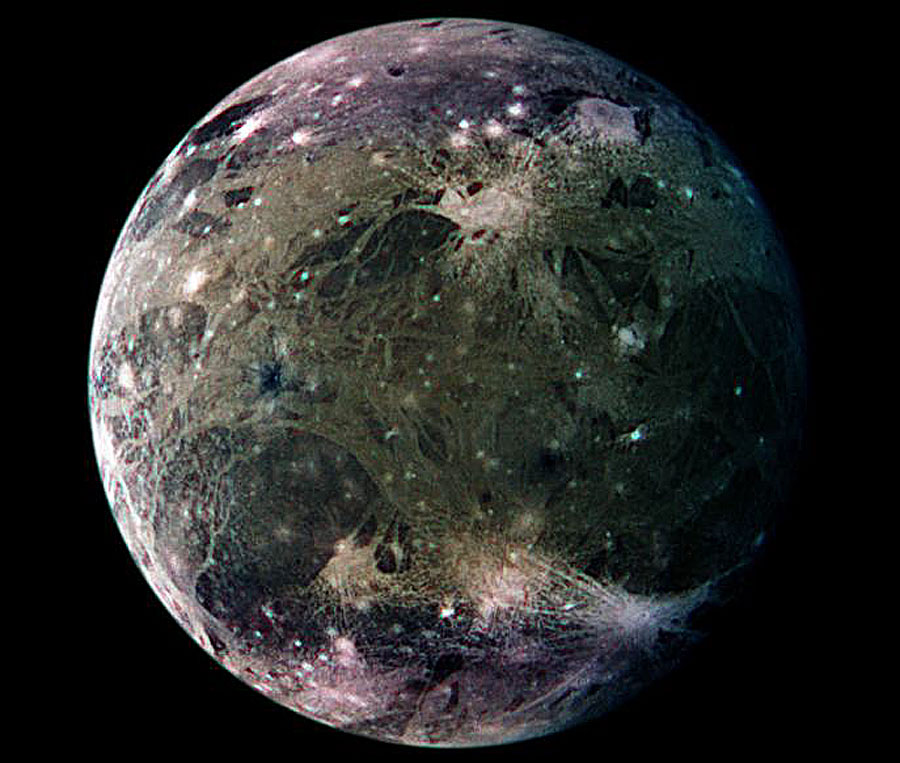
The “Eldest Grandson” of the Solar System—Ganymede!
What does the largest moon in the solar system look like? Ganymede, the largest moon, is even larger in volume than Mercury and Pluto. Its surface is rough and consists of a mix of two types of terrain: very old, dark regions heavily pockmarked with craters, and relatively young, brighter regions characterized by extensive grooves and ridges. Much like the Moon is tidally locked to Earth, Ganymede always faces Jupiter with the same side. This historic, high-resolution image was captured by the Galileo spacecraft while it orbited Jupiter from 1995 to 2003; the color, size, and contrast have been enhanced for clarity. The violet hues extending from the top and bottom are likely particles from polar frost regions. Currently proposed future missions to Jupiter include exploring the potential subsurface oceans of Europa and Ganymede, as they may contain ingredients necessary to sustain life.
NASA Websites:
When reposting, please
include the original address of this article:
https://kexue.fm/archives/130
For more detailed information
regarding reposting, please refer to:
“Scientific Space
FAQ”