September marks the arrival of autumn, and October is a season of even more refreshing autumn air. Such weather is great news for astronomy enthusiasts. Furthermore, the coincidence of the Mid-Autumn Festival and National Day is even more delightful. I would like to wish everyone a Happy National Day and a Happy Mid-Autumn Festival in advance! Have you decided where to go for the holidays?
Before you head out, you might want to pay attention to the astronomical phenomena in October. Recently, there are three main areas of celestial events available for observation, including two meteor showers, planetary occultations by the Moon, and planetary conjunctions. Friends who enjoy photography will certainly love these.
Major Astronomical Events:
October: The Sun moves from Virgo to Libra.
03: Happy Mid-Autumn Festival!
06: Mercury at greatest western elongation
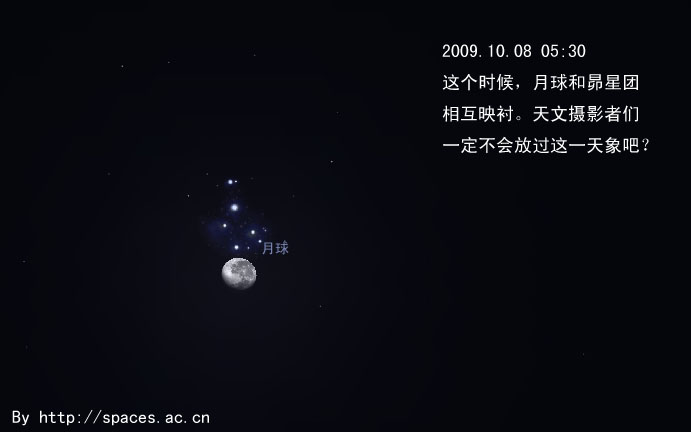
08: Lunar occultation of the Pleiades; Mercury-Saturn conjunction
09: Draconid meteor shower peak (00:40, ZHR=20)
12: Lunar occultation of Mars
13: Venus-Saturn conjunction
14: Venus-Jupiter conjunction
18: \epsilon Geminid meteor shower peak (ZHR=2)
21: Lunar occultation of Antares; Orionid meteor shower peak (ZHR=30)
23: Leonis Minorid meteor shower peak (ZHR=2)
27: Jupiter-Moon conjunction
Lunar Phases:
Full Moon: Oct 03, 03:14
Last Quarter: Oct 09, 23:56
New Moon: Oct 17, 03:14
First Quarter: Oct 25, 05:39
Comet Dynamics:
Oct 07: Comet C/2007 Q3 at perihelion
Oct 12: Comet 88P/Howell at perihelion
Oct 21: Comet 127P/Holt-Olmstead at perihelion
Oct 22: Comet Wilson-Harrington at perihelion
Detailed Information:
(The observation point for the images is 112.2^\circ E, 22.68^\circ N, Xinxing County, Yunfu City, Guangdong Province—my hometown)
October 3: Mid-Autumn Festival
The 15th day of the eighth lunar month is China’s traditional Mid-Autumn Festival, the second largest traditional festival after the Spring Festival. In the ancient Chinese calendar, the eighth month, which falls in the middle of autumn, is called "Zhongqiu" (Mid-Autumn). The ancients used "Zhongqiu" and "Zhongqiu" (written with different characters) interchangeably. In the Book of Documents: Canon of Yao, which is likely the earliest record, it is written: "The day is of medium length, and the star is Xu; thus to determine the mid-point of autumn." "Day of medium length" refers to the equal length of day and night (equinox), "Xu" is one of the seven mansions of the Black Tortoise in the north, and "determine" means to use the appearance of the star Xu in the south at dusk and the equal day and night to explain the climate of the mid-autumn season.
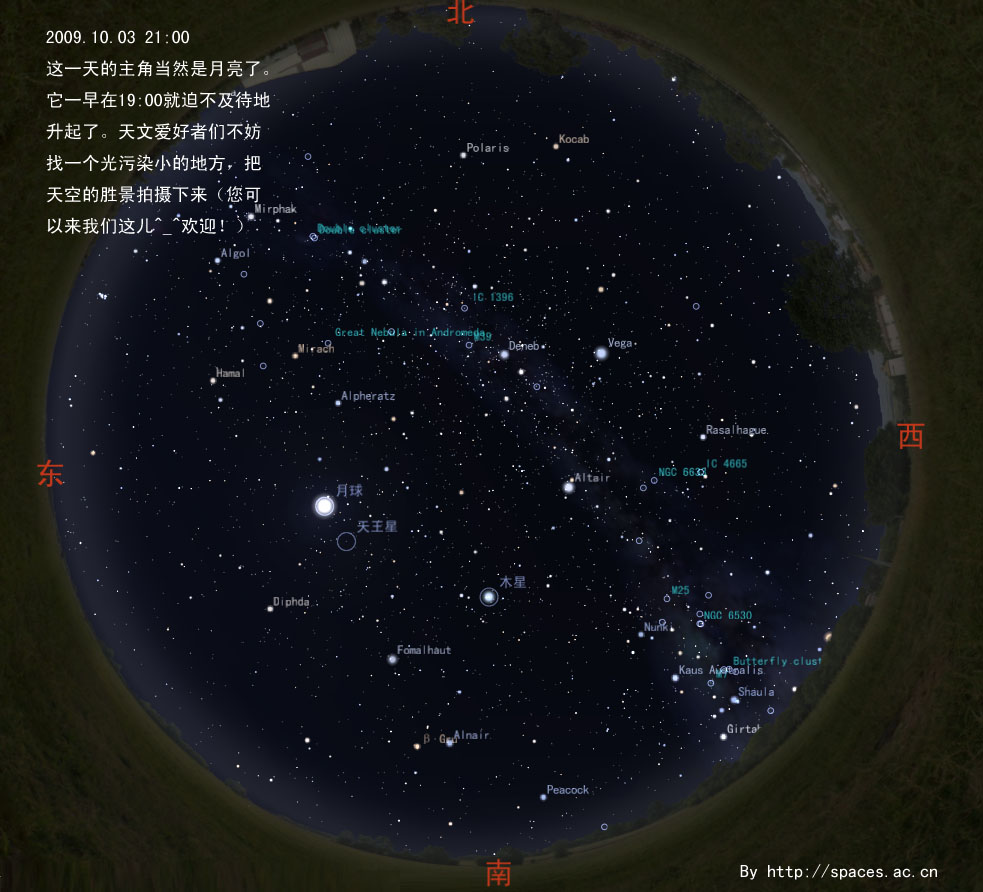
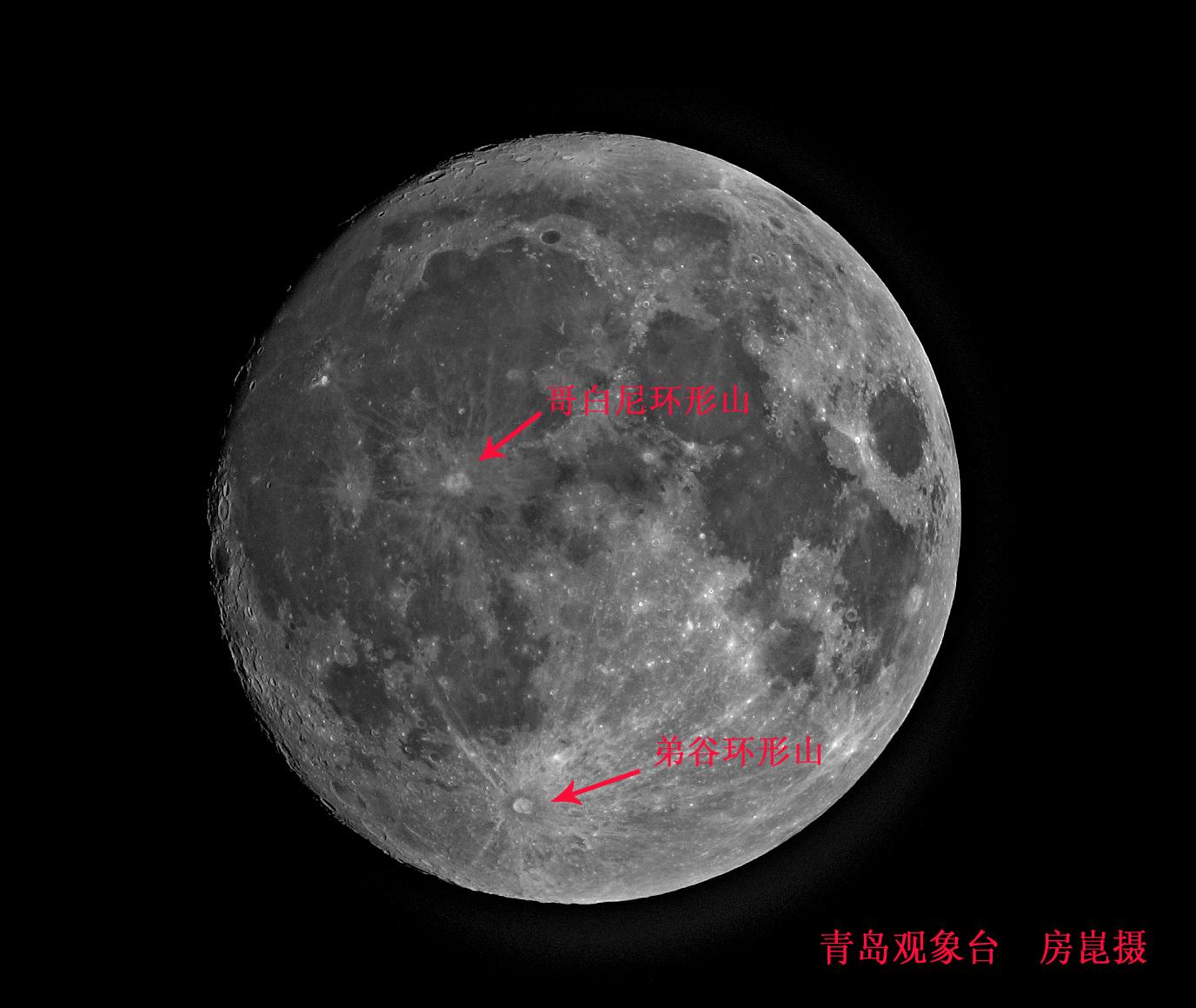
This year’s Mid-Autumn Festival follows the pattern of "the moon is roundest on the 16th day." The exact moment of the full moon (opposition) is October 4 at 14:10. During the Mid-Autumn full moon, because of the direct lighting, the moon’s characteristic topography—craters (the pitted surface)—basically casts no shadows. What remains visible are the lunar maria (seas without water), which are actually plains and depressions on the moon. One can observe the Tycho crater, Copernicus crater, and their ray systems.
Wishing everyone a happy Mid-Autumn Festival; may the moon be round, families be reunited, and everything be perfect.
October 6: Mercury at Greatest Western Elongation
Mercury’s greatest elongation is a relatively frequent astronomical event throughout the year. However, because Mercury’s declination can sometimes be lower than the Sun’s, observation conditions may not be ideal even at greatest elongation. For Mercury observation, besides the timing being near the elongation, the difference in declination from the Sun is also a very important condition.
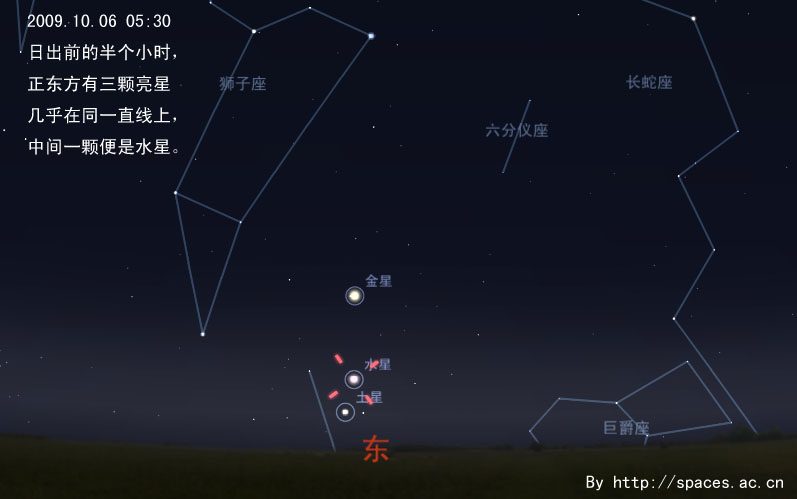
The greatest western elongation of Mercury on October 6 is the only western elongation this year with decent observation conditions. At this time, Mercury’s declination is about 8^\circ higher than the Sun’s. Although the angular distance from the Sun is only 18^\circ, it will be difficult to see Mercury after sunrise. In the Qingdao area, between 5:30 AM and 5:56 AM (sunrise is at 5:57 AM), the altitude will be between 11^\circ and 17^\circ. If the weather is clear, find a place with an open eastern horizon. In the dawn light, you can not only find Mercury but also see Venus and Saturn not far from it.
Mercury reaches greatest western elongation with a maximum angular distance of 18 degrees from the Sun. Its altitude at sunrise is 16 degrees, with a magnitude of -0.6. This is the third best opportunity to observe Mercury this year.
October 8: Lunar Occultation of the Pleiades
October 9: Draconid Meteor Shower Peak
The Draconid meteor shower is also known as the Giacobinids, named after its parent comet, 21P/Giacobini-Zinner. This meteor shower appears in early October, with the best observation dates from October 8 to 10. The best time for observation is the few hours before dawn, in a clean sky and a dark location without light pollution. In 1933 and 1946, there were records of thousands of meteors per hour.
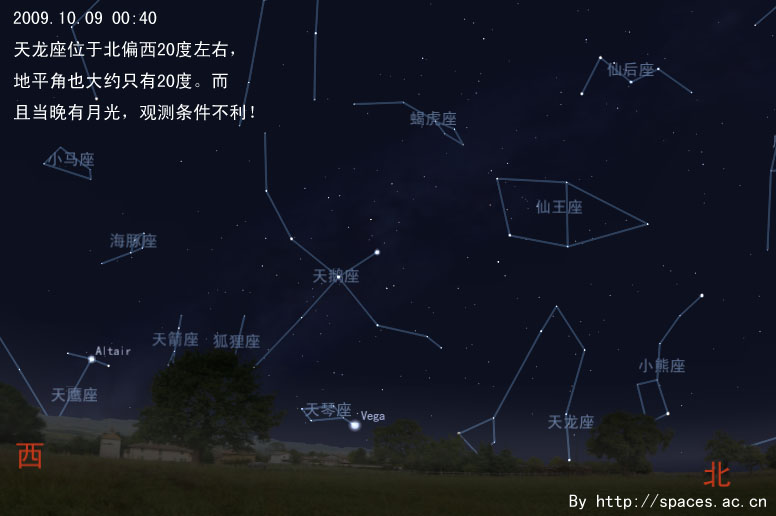
The radiant of the Draconid meteor shower is located near the irregular quadrilateral of the "Dragon’s Head." The impression it leaves is one of slow descent; slow speed is a characteristic of the Draconids. Unlike most meteor showers, its activity period is very short, basically from October 7 to 10 each year. According to the International Meteor Organization’s forecast, the Draconids may have multiple peaks this year. The first is around 16:45 Beijing time on October 8, which is during the day in China and cannot be observed visually. The next possible peak is at 00:40 Beijing time on October 9, but while the radiant is higher in the first half of the night, there will be moonlight interference all night. The final peak period is from 6:00 to 9:00 Beijing time on October 9, with a flow rate of only 10-20 meteors per hour.
October 13: Venus-Saturn Conjunction
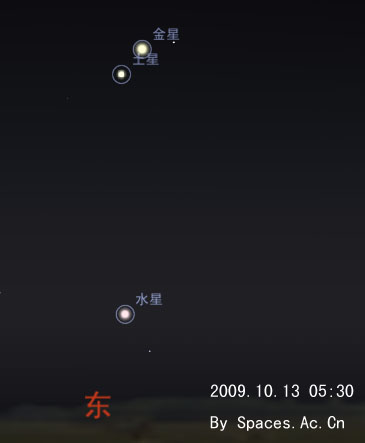
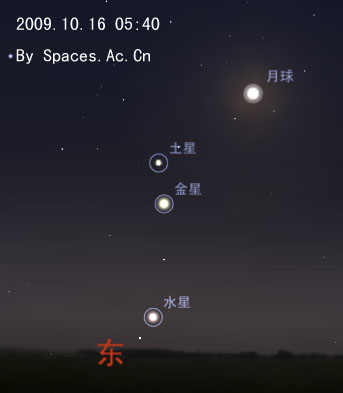
In the early morning of mid-October, a "triple conjunction" will take place low in the eastern sky. The three protagonists are Mercury, Venus, and Saturn. In fact, starting from early October, these three planets have been gradually coming together. On October 8, Mercury first aligns with Saturn (Note: context suggests Saturn). On that morning, the angular distance between them is only about 30'. After this, Mercury begins to move away from Saturn, while Venus continues to approach it. On the morning of October 11, we can see the three planets arranged almost in a straight line, with nearly equal spacing.
October 21: Orionid Meteor Shower Peak
The Orionid meteor shower originates from the famous comet 1P/Halley and is active from early October to early November each year. The radiant of this shower is located near the celestial equator, making it observable from most parts of the world. The characteristics of the Orionids are very distinct: fast speeds, many bright meteors, white in color, and a long-lasting peak.
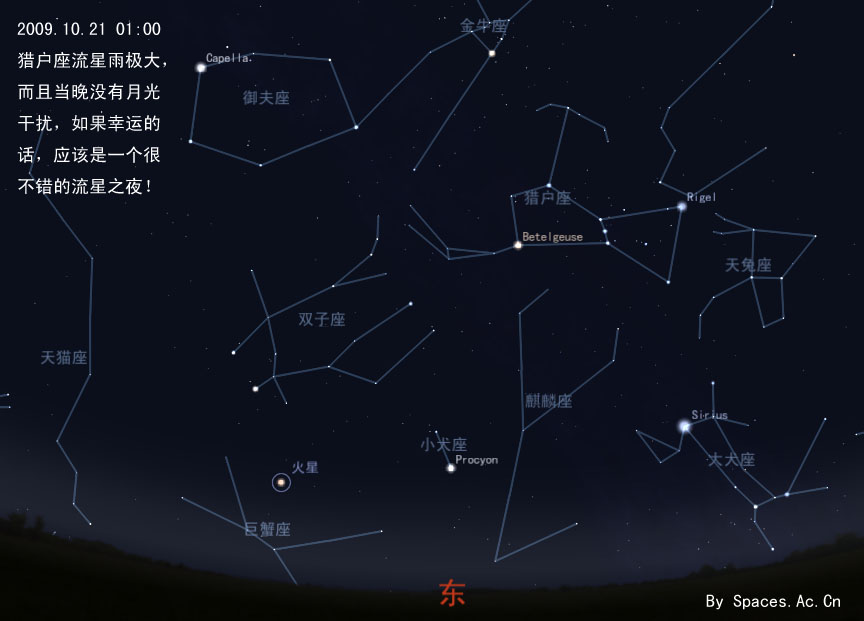
According to the International Meteor Organization’s forecast, the peak of the Orionid meteor shower this year will occur around October 21. Based on past experience, monitoring is possible from October 18 to 23, with ZHR rates exceeding 30. There will be no moonlight interference during this peak. The radiant of the Orionids does not rise to a significant height until after 11:00 PM, making the latter half of the night the best time for observation. During this season, there are many minor meteor showers and sporadic meteors, so when you see a meteor, you must judge whether it belongs to the Orionids.
The Orionids, along with the Geminids and Perseids, are sometimes referred to as the "three major meteor showers." There are two types of Orionids: one with a radiant near Betelgeuse appearing around November 20, and another with a radiant near \nu Orionis occurring from October 15 to October 30, peaking on October 21. The "Orionids" we usually refer to is the latter, caused by the famous Halley’s Comet. Halley’s Comet returns to the inner solar system every 76 years, and the debris scattered along its orbit forms the famous Orionid meteor shower.
Planetary Dynamics
Mercury: Morning star. Reaches greatest western elongation on October 6, with a maximum angular distance of 18 degrees from the Sun. Altitude at sunrise is 16 degrees, magnitude -0.6. This is the third best opportunity to observe Mercury this year.
Venus: Known in ancient China as the "Morning Star" (Qiming) and "Evening Star" (Changgeng). From September to October, it gradually approaches the Sun, with its altitude at sunrise decreasing to about 20 degrees. Magnitude is approximately -3.9.
Mars: Moves from Gemini to Cancer. Its rising time gradually advances from around midnight to around 11:00 PM. Magnitude increases from 1.0 to 0.5. The latter half of the night is a favorable time for observation.
Jupiter: Located in Capricornus. Visible in the southeastern sky after dark. Magnitude decreases from -2.8 to -2.5.
Saturn: After mid-October, it appears low in the eastern sky before sunrise. Magnitude 1.1.
Uranus: Located in Pisces.
(Some content is sourced from "Amateur Astronomer" and online resources; images are from Stellarium; compiled by Scientific Space)
When reposting, please include the original address: https://kexue.fm/archives/129
For more detailed reposting matters, please refer to: "Scientific Space FAQ"