Author’s Note: The greenhouse effect is currently intensifying. However, tens of millions of years ago, the situation was exactly the opposite: a sharp drop in carbon dioxide levels was making the Earth colder and colder. A “savior” appeared and saved the planet! This great “savior” is the plant life we see everywhere. Now, let us follow in the footsteps of New Scientist to look at that ancient “savior”!
Main Text:
Regarding plants, in addition to the
obvious benefits they bring, it seems we should also be grateful to them
for our very survival, because 25 million years ago, they helped prevent
a freezing cold disaster on Earth!
About 50 million years ago, Earth was a veritable hothouse—even the poles were not frozen, and crocodiles lived in the Arctic region. Subsequently, the concentration of carbon dioxide in the atmosphere began to drop to approximately 1000–1500 ppm (parts per million), and the Earth began to cool.
Around 24 million years ago, the uplift of the Himalayan and Andean mountain ranges led to large-scale weathering of rocks. This weathering process absorbed massive amounts of carbon dioxide from the air, reducing the greenhouse effect and lowering the Earth’s temperature.
However, there was still a “savior” that kept Earth’s carbon dioxide levels at a stable level, preventing the Earth from turning into a giant “icehouse.” Now, Mark Pagani from Yale University in New Haven, Connecticut, and his colleagues have identified this “savior”—plants.
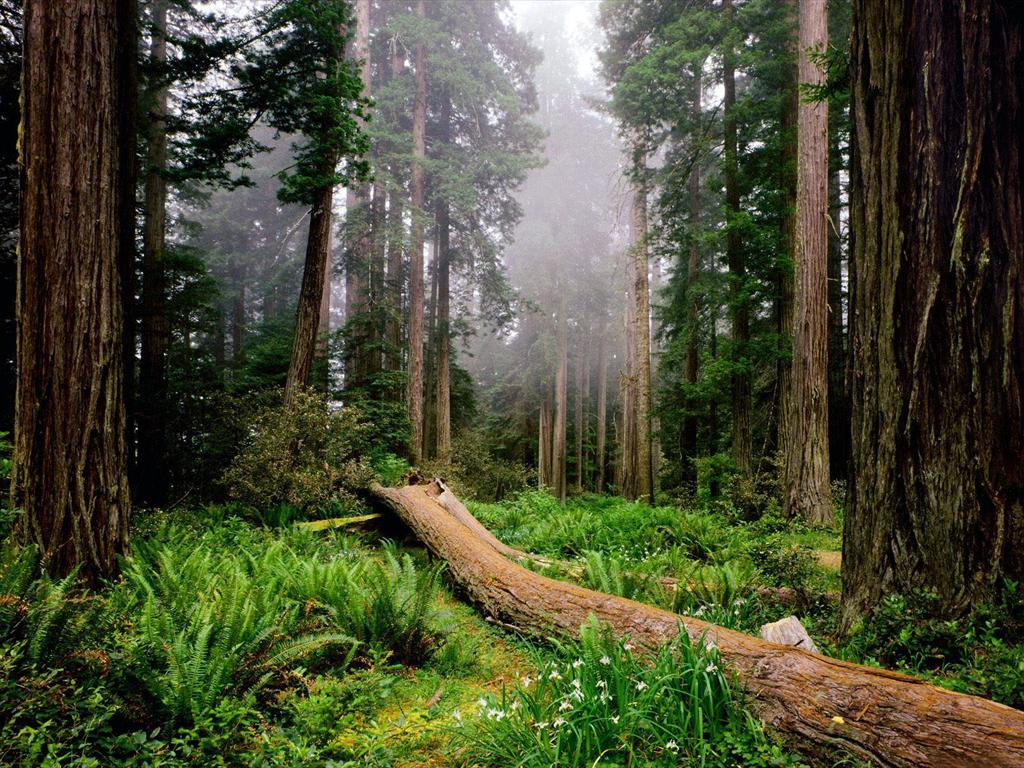
Trees play a crucial role in the process of sequestering atmospheric carbon dioxide into magnesium and calcium carbonates: as mountains grow, rocks break apart and are transported to the foothills; then, trees cause the rocks buried in the soil to decompose into other minerals, which then combine with carbon dioxide from the air. The formation of limestone occurs in a similar fashion.
Opposite Results:
The research team used computer models to simulate the sensitivity of vegetation to climate and atmospheric carbon dioxide. They found that when the atmospheric CO2 concentration dropped to about 200 ppm, plants began to feel “hungry” and “suffocated” (lacking the necessary raw materials for photosynthesis). This led to the opposite result: inhibiting the weathering of rocks into carbonates, thereby putting a natural brake on the decline of CO2 levels and allowing CO2 levels to rise again.
“The carbon dioxide level came down and banged up against this lower limit, and has more or less been banging up against this lower limit for the last 20 odd million years,” says team member Ken Caldeira of the Carnegie Institution of Washington in Stanford, California. “Plants [played] a critical role in preventing the Earth from going into a deep freeze.”
Mathew Huber, a climate scientist at Purdue University in Lafayette, Indiana, points out that this work provides a “nice explanation of a negative feedback in the climate system.”
Originally from the New Scientist magazine website; the following is the original English text:
Plant life saved Earth from an icy fate
Besides the obvious benefits they bring, it looks like we owe our very existence to plants, which helped prevent the Earth from freezing over during the past 25 million years.
About 50 million years ago, Earth was a hothouse – the poles were ice free, and crocodiles lived in the Arctic. Then, the concentration of carbon dioxide in the atmosphere started dropping from around 1000-1500 parts per million (ppm), and the Earth began to cool.
By about 24 million years ago, the uplift of the Himalayan and Andes mountain ranges led to large-scale weathering of rocks, a process that removes massive amounts of CO2 from the atmosphere. This reduced the greenhouse effect and cooled the planet.
But something kept the CO2 levels from dropping beyond a certain point, preventing Earth from turning into an icehouse. Now, Mark Pagani of Yale University in New Haven, Connecticut, and colleagues have identified our saviours: plants.
Trees play an important role in the sequestration of atmospheric CO2 in magnesium and calcium carbonate rocks. As mountains grow, rocks break down and become transported to the foothills, where trees hold them in place in the soil and break them down into minerals. These then combine with CO2 to form, for example, limestone.
Negative feedback
The team used computer models to simulate the sensitivity of vegetation to atmospheric CO2 and climate, and found that as the CO2 concentration dropped to about 200 parts per million, the plants started starving and suffocating. This caused a negative feedback, preventing weathered rocks from turning into carbonates, thus putting a natural brake on the sequestration process and letting CO2 levels rise again.
"The carbon dioxide level came down and banged up against this lower limit, and has more or less been banging up against this lower limit for the last 20 odd million years," says team member Ken Caldeira, of the Carnegie Institution of Washington in Stanford, California. "Plants [played] a critical role in preventing the Earth from going into a deep freeze."
Mathew Huber, a climate scientist at Purdue University in Lafayette, Indiana, says that the work provides a "nice explanation of a negative feedback in the climate system".
When reposting, please include the original address of this article: https://kexue.fm/archives/15
For more detailed reposting guidelines, please refer to: Scientific Space FAQ