It has been a month since the last update. This month, I have spent a considerable amount of time understanding Riemannian geometry, and I have some insights to share with everyone. I remember that the "Understanding Matrices" series written by Meng Yan and the "New Understanding of Matrices" written by myself were both well-received by readers. This time, I have adopted a similar naming convention, calling this series "Understanding Riemannian Geometry."
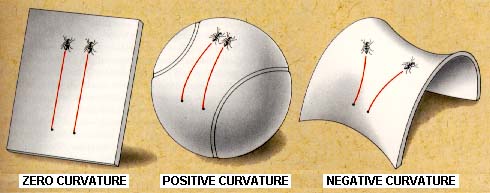
Riemannian geometry is a branch of geometry that studies intrinsic geometry. In layman’s terms, it suggests that we might live in a curved space. For example, consider an ant living on a two-dimensional sphere. As an individual living within a curved space, we do not possess enough wisdom to embed our curvature into a higher-dimensional space for study. Just as an ant only knows how to crawl on the sphere and cannot understand the sphere from the perspective of a "surface in three-dimensional space," the sphere is their entire world. Therefore, we have intrinsic geometry, which tells us that even within a curved space, we can still measure length, area, and volume; we can still perform differentiation and integration; and we can even discover that our space is curved! That is to say, as long as the ants on the sphere are intelligent enough, they can discover that the surface is curved—much like Columbus’s circumnavigation—by traveling in one direction and eventually returning to the starting point. This allows them to conclude that the space they inhabit must be curved, a discovery that does not require knowledge of three-dimensional space.
That being said, you likely won’t see the above perspective at all in standard Riemannian geometry textbooks (we use the English version of Riemannian Geometry by Manfredo P. do Carmo)—except perhaps a brief mention in the preface. What you will see instead is a vast collection of concepts like "manifolds," "homeomorphisms," "tangent bundles," "metrics," "connections," and "exterior derivatives," all of which seem baffling at first glance. After burying yourself in study for a semester, you might feel like you are studying abstract functional analysis (Riemannian Functional Analysis?), with no geometric flavor whatsoever. Has anyone even wondered: are we truly studying geometry? Besides the lack of geometric intuition, many concepts are introduced without their actual geometric background, presented purely as abstract definitions. For instance, when discussing the metric, it is said that an inner product is introduced in the tangent space to obtain the metric, and then the inner product of vectors in the tangent space can be represented by the metric. This seems clear enough, but in reality, many students at this point haven’t even grasped what a tangent space is. Even if they have, they remain confused: what is this thing, and why do we do it this way?
Admittedly, abstraction has its benefits; once abstract concepts are understood, they can often solve a wide class of problems. However, this is a geometry course, after all. We need some intuitive elements within it so that meticulous and rigorous mathematical concepts do not hinder our thinking. Intuition may not be the ultimate goal of mathematics, but it is often the source of inspiration.
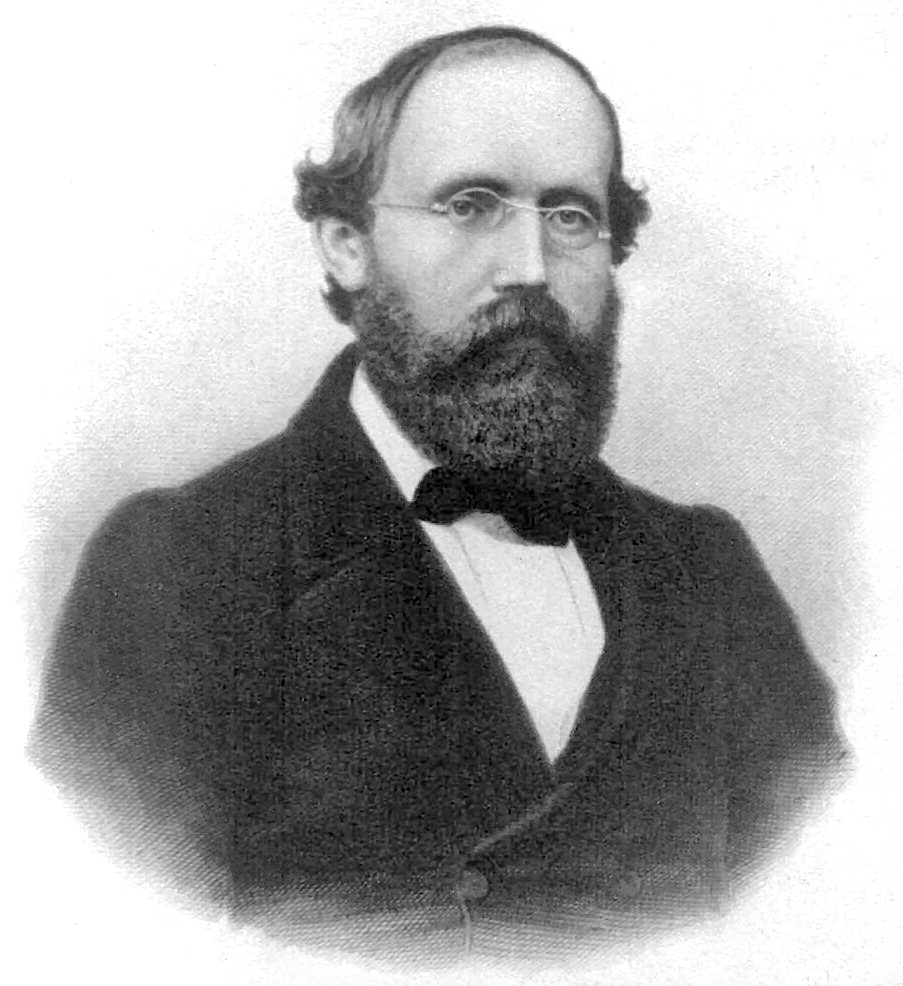
In this article, I attempt a geometric approach to elucidate some of the more important concepts in Riemannian geometry. This is not a path suitable for beginners. For example, we quickly move to calculating geodesics through variations, which might be too demanding for an introductory level. However, upon reflection, readers may feel that this is a path with a "strong geometric flavor." Here, there are no manifolds, no exterior derivatives, and no tensors. To seek ideas and inspiration, I specifically looked at Riemann’s original papers on geometry in the Collected Works of Riemann—since it is Riemannian geometry, how can one not read Riemann’s papers?—and found that the narrative style Riemann originally adopted has similarities to this article. For instance, he also started quickly from the metric and derived the geodesic equations using the calculus of variations before expanding into other discussions. It is evident that the variational method is clean and efficient, and it is indeed worth learning.
For readers who pursue rigor, it should be pointed out that we are actually only discussing torsion-free geometry (i.e., assuming the torsion is zero). The Riemannian geometry used in General Relativity is also torsion-free. Torsion-free essentially means that the space is locally equivalent to a flat space everywhere. This form of geometry is quite practical; even if one wishes to understand geometry with torsion deeply, one must first have a profound understanding of torsion-free geometry.
This series refers to all the books on Riemannian geometry and General Relativity that I own, including:
Differential Geometry (Peng Jiagui, Chen Qing)
Collected Works of Riemann, Vol. 1 (Higher Education Press)
Gravitation (The "MTW" bible of gravitation, which contains many calculation examples)
The Classical Theory of Fields (Landau)
Gravitation and Spacetime
The Feynman Lectures on Physics (The world-renowned physics textbook)
Feynman Lectures on Gravitation (Feynman’s General Relativity course)
Modern Geometry: Methods and Applications, Volume 1: The Geometry of Surfaces, Transformation Groups, and Fields
Readers may also read the above works to assist their understanding. Finally, to repeat once more, this series of articles can hardly serve as a standalone Riemannian geometry tutorial. At most, it is a supplement to the geometric meaning of existing tutorials. For many deeper topics, standard textbooks are still required. I am merely attempting to interpret the geometric meaning of some basic content and provide a thread to connect them.
When reposting, please include the original address of this article: https://kexue.fm/archives/3963
For more detailed reposting matters, please refer to: Scientific Space FAQ