I am not a researcher of gravity, nor have I studied it extensively. In the field of theoretical physics, I have studied classical mechanics and quantum mechanics much more than General Relativity. Therefore, I probably should not be talking about gravity to avoid misleading anyone. However, during a bus ride, the driver’s braking and acceleration made me think of some things related to gravity. I found these thoughts quite interesting, so I am sharing them here for discussion and correction.
The Equivalence Principle
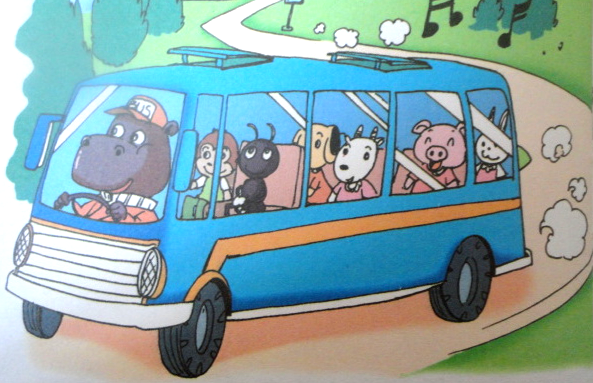
Gravity, or more accurately, "Universal Gravitation." The term "Universal" has two meanings: 1. All objects can produce gravity; 2. All objects are affected by gravity. It is quite strange to Einstein that a force could be "universal." This is the most significant difference between gravity and the other three fundamental forces. In contrast, the electromagnetic force only exists where there is "charge," the weak interaction only exists between fermions, and so on.
Besides gravity, do we encounter any other "universal" forces in our daily lives? It seems not. But let’s imagine: when you are sitting in a long-distance bus moving at a constant speed, and the driver suddenly slams on the brakes, at that moment of braking, everyone leans forward. Not only that, but your suitcase and your personal belongings might also move forward. In fact, everything on the bus experiences a forward force! For the people and objects on that bus, at the moment of braking, a "universal" force exists!
Let’s understand this accurately. From the perspective of Newtonian mechanics, there is actually no such force. Because we are sitting on the bus, we naturally choose the bus as our reference frame. When braking, the bus becomes a non-inertial frame, and thus there is a corresponding non-inertial force (fictitious force). This force arises because of the choice of a non-inertial frame; it is not a "real" force (in Newtonian mechanics, a "real" force requires an agent, a recipient, and a method of interaction; for inertial forces, there is clearly no agent). From a mathematical perspective, this is an extra term generated by coordinate transformation. Therefore, this force must be "universal." As long as an inertial frame is chosen, this force disappears.
However, if we are on the bus and, further, assume we cannot see anything outside the window, then we have no concept of an inertial frame, or we believe that where we are is an inertial frame. Therefore, we are willing to believe that at the moment of braking, a "universal force" was indeed generated on the bus. Analyzing further, we find that this force originates from the braking, and the action of braking is performed by the driver. Thus, we could even conclude: The driver exerts a universal force on everything in the car!!
This conclusion sounds quite humorous. But if a group of people lived on the bus forever, they might inevitably reach such a conclusion. Of course, with deeper research, the passengers would discover that it isn’t that the driver exerts a universal force on them directly, but rather that the driver stepped on the brakes, which decelerated the entire bus, and then the bus moved us, creating the force. This is closer to the truth.
Looking at gravity and General Relativity, isn’t it exactly like this? Einstein felt that a universal force was very incredible, so he thought it might not be a force at all, but likely just a non-inertial frame. Thus, he first wrote down the Equivalence Principle: Gravity and non-inertial frames are equivalent (textbooks might not phrase it exactly like this). Then he went on to believe that it is not that objects exert a universal force on other objects, but that objects act on spacetime (just as the driver steps on the brakes), and then spacetime acts on other objects (just as the car causes us to lean forward). This is the starting point of General Relativity.
However, if it only stopped at this step, the theory of gravity would merely be a restatement of Newton’s Law of Universal Gravitation in another way, without bringing anything new. Einstein, with a sublime respect for beauty, required physics to satisfy the Principle of General Relativity.
The Principle of General Relativity
The Principle of General Relativity states:
All reference frames are equivalent.
This is the most concise and economical requirement for physics!
Some readers might challenge this. Sitting in a car moving at a constant speed feels significantly different from sitting in a car that is accelerating; how can they be called equivalent? This is why General Relativity is difficult to understand. In fact, the "reference frame" here refers to spacetime, not just space. We are accustomed to thinking about problems in three-dimensional space and separating time. However, if we view space and time as a single entity—from the perspective of "spacetime"—they are equivalent. A similar example is when we say gravity causes spacetime to curve; a reader might ask why they don’t see their desk being curved. Similarly, it is "spacetime" that is curved, not just "space."
As for how to derive the complete theory of General Relativity from the Principle of General Relativity, this article cannot cover it, but we can outline the logic. First, the Principle of General Relativity restricts the form of physical laws. Note that in General Relativity, gravity is no longer a force; it is simply the structure of spacetime. Therefore, by accepting the Principle of General Relativity, General Relativity is actually the "simplest physical law"—it is equivalent to a free particle in Newtonian mechanics—because no other forces are considered (again, in General Relativity, there are no other forces; so-called gravity is just the structure of spacetime. Wouldn’t you say that not considering any forces is the simplest case?). Because of this, by restricting the form of physical laws, one can derive General Relativity without knowing the primary content of the physical laws—because there are no physical laws; in the Principle of General Relativity, we are merely describing the structure of spacetime and haven’t talked about forces yet.
G_{\mu\nu}=R_{\mu\nu}-\frac{1}{2}g_{\mu\nu}R=\frac{8\pi G}{c^4}T_{\mu\nu}
As for the specific derivation? That requires the help of differential geometry. We can use a metric to describe spacetime, and the Principle of General Relativity actually requires physical laws to have general covariance. It is said that after Einstein had the aforementioned ideas, he still had to honestly take courses in differential geometry before he could write down the complete theory. In fact, the entire derivation process also implies an unwritten convention: When the new theory is at small masses and low speeds, it must reduce to classical mechanics. After all, Newtonian mechanics has been long-tested.
In Summary
Reviewing the entire article, it is essentially just a process of philosophical reasoning. Yet Einstein, relying on such a reasoning process, arrived at General Relativity (of course, the mathematical content of differential geometry cannot be ignored). This is the greatness of Einstein!
Please include the original address when reposting: https://kexue.fm/archives/3739
For more detailed information on reposting, please refer to: Scientific Space FAQ