
Today I have joined the "I care, I act" team. Although my strength is small, there is still hope. May everyone take action! Everyone cares, everyone acts!
The Copenhagen Summit is the best opportunity to stop climate change, and from now until December is the most important time for action. How much time do we have left to save the Earth? Let more people join "I care, I act"!
http://icare.greenpeace.org.cn/
"I Care Messenger" Software: http://icare.greenpeace.org.cn/messenger
How to add a countdown to your own website?
http://icare.greenpeace.org.cn/?action-activity-itemid-14
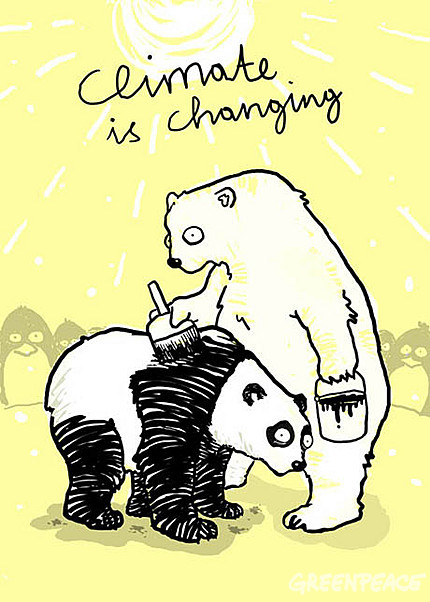
Appendix: August in Bonn, Smoke Rises Again.
On August 10, a week-long new round of United Nations climate change negotiation meetings opened in Bonn, Germany. This is the third time this year that representatives from various countries under the United Nations Framework Convention on Climate Change (UNFCCC) have gathered in Bonn to continue negotiations on the next stage of the global agreement, preparing for the Copenhagen Summit at the end of the year.
On August 13, the "Copenhagen Countdown" clock erected on the assembly stage showed that there were only 115 days left until the opening of the Copenhagen Summit. "We don’t have much time left!" said Yvo de Boer, Executive Secretary of the UNFCCC Secretariat. "The main purpose of this meeting is to streamline the discussion draft; there are many issues to discuss."

The core goal of the first three days of this Bonn meeting was very clear—2,400 representatives from 180 countries were to simplify the Copenhagen negotiation discussion draft, which was over 200 pages long and contained 2,500 "brackets" (undetermined content).
Negotiation Draft Urgently Needs "Slimming Down"
The fields involved in climate change negotiations are quite extensive, and the interests of various countries are complex and intertwined. A few months ago, the discussion draft was only about 30 pages long. However, because the views of various parties on many issues were far apart, the UN negotiation coordinators could only keep the different opinions in the draft in the form of brackets for undetermined content, causing the draft to "gain weight" rapidly.
This 200-plus page discussion draft includes four major areas: long-term goals and cooperation agreements, impacts and methods of adapting to climate change, climate change mitigation measures (including emission reduction targets for developed countries and measures for developing countries to limit emission growth), and support for capital, technology, and capacity building. In addition, the structural issue of the final agreement is also an important topic of concern for all parties.
The first three days of this week’s meeting were specifically used to discuss how to reduce the discussion draft. Michael Zammit Cutajar, the chair presiding over the draft negotiations, set a goal for the "slimming plan," hoping that by the end of the next round of meetings in Bangkok, the draft could be reduced to 30 pages. This way, countries can concentrate on discussing the main points of divergence in the remaining time to ensure that the international community can reach a final agreement at the Copenhagen Summit in December.
Ambassador Yu Qingtai, Special Representative for Climate Change Negotiations of the Chinese Ministry of Foreign Affairs, said: "The basis of the 200-page discussion draft is a summary of the positions of all countries participating in the negotiations, so it will inevitably be very long. The next task is to further strengthen the logic of the draft, straighten out the structure, and refine and organize repetitive content."
Some representatives at the Bonn meeting believed that the UN Convention Secretariat could take the lead in cleaning up repetitive text in the current draft, which is estimated to reduce the 200 pages to 150. However, the subsequent reduction work will involve the screening of different viewpoints. Some environmental organizations attending the meeting hoped that the negotiation chair would "take the knife," but Chair Michael clearly stated that reducing the draft should be a process led by the negotiating countries. After all, the final Copenhagen Summit agreement can only be passed if all countries sign and agree to it.

Currently, negotiations have entered an increasingly technical stage of detailed discussion, and fierce games between parties are inevitable. However, as the public in various countries pays more attention to climate change issues, expectations for the results of the Copenhagen Summit are also rising. Promoting the negotiation process as quickly as possible is also in line with the wishes of the representatives of the vast majority of countries.
Yu Qingtai expressed "confidence" in streamlining the discussion draft. Historically, there is experience to follow for the successful slimming of climate negotiation drafts. In April 1997, when countries were negotiating to reach the "Kyoto Protocol," the "weight" of the discussion draft once reached 128 pages and was filled with a large number of "brackets" containing undetermined content. Through the hard work of the representatives, by October, the negotiation draft was refined into a 26-page text with a clear structure. In December of that year, the first global agreement to protect the climate—the "Kyoto Protocol"—was born.
Developed Countries Lower Emission Reduction Targets
If parties can maintain confidence in the "slimming" of the discussion draft, they may find it difficult to be optimistic about the emission reduction targets of developed countries. UN Executive Secretary Yvo de Boer told reporters: If developed countries do not set strong emission reduction targets, "the significance of the Copenhagen agreement will be greatly compromised."
At the opening ceremony of the meeting on August 10, New Zealand released its emission reduction target: by 2020, it will reduce its emissions by 10–20% from 1990 levels. So far, the vast majority of developed countries have released their mid-term emission reduction targets for 2020, and the average level of these targets is 10–14%, which is less than half of what is required. The "Bali Roadmap" reached in 2007 clarified that developed countries need to achieve an emission reduction target of 25–40% by 2020, and some other developing countries have even higher requirements.
In its Copenhagen position released earlier, China reiterated that developed countries should reduce emissions by at least 40% from 1990 levels by 2020. Yu Qingtai said: "Developed countries have put a lot of effort into promoting their emission reduction plans, but the actual effort is small. Considering historical responsibility and the principle of fairness, developed countries have an obligation to do more." At the same time, Yu Qingtai also expressed concern about the attempts of developed countries to shift the pressure of emission reduction to developing countries. "Some developed countries are unwilling to fulfill the decisions of the Convention and the Bali Roadmap, unwilling to assume their due historical responsibilities, and unwilling to take practical actions to reduce emissions. This is very irresponsible for the Copenhagen negotiations."
Martin Kaiser, Climate Policy Director of the international environmental organization Greenpeace, said: "Copenhagen is our historic opportunity to save the climate, but we are still so far from the required emission reduction levels. Developed countries must at least double or triple their emission reduction targets in the remaining 100-plus days."
Between this Bonn meeting and the Copenhagen Summit at the end of the year, representatives from various countries still have two meetings and a total of less than 20 days of negotiation time. The Bangkok meeting from September 28 to October 9 and the Barcelona meeting from November 2 to 6 are the last chances to adjust the emission reduction targets of various countries.
Author: Yang Ailun
[Having worked at Greenpeace for nearly 5
years, she is the manager of the Climate and Energy project, leading a
team of 7 people to plan and implement Greenpeace’s work in China in
this field. With two master’s degrees in finance and sociology, she
frequently publishes commentaries on climate and energy issues in
various newspapers and magazines, and has given speeches at home and
abroad. She has been called an "expert" on many occasions, though she is
actually quite young. Recently, she was promoted to mother and is
determined to work hard for a clean future for her baby, firmly
believing that mankind can use wisdom and courage to avoid the most
severe consequences of climate change.]
When reposting, please include the original address of this article: https://kexue.fm/archives/84
For more detailed reposting matters, please refer to: Scientific Space FAQ