Translated by DeepSeek V4 Pro. Translations can be inaccurate, please refer to the original post for important stuff.
Su JianlinAugust 18, 2009#81
Author’s Note: This translation is a bit
messy, but let’s ignore that for now and focus on the
content.
Meetings, meetings, meetings...
meetings about climate issues continue, but a good consensus has still
not been reached, while climate deterioration is ongoing, and the
situation is becoming more and more severe. Other ways to suppress the
greenhouse effect are not yet mature... Where is the way to solve
climate change?
Can the World Unite to Combat Climate Change?
An international agreement currently under discussion still faces
huge differences.
By Paul Voosen
The latest round of preparatory talks for the United Nations climate
conference ended today, with participants sadly stating: progress is so
slow that it may mean an agreement on emissions cannot be reached at the
Copenhagen meeting this December.
"If this opportunity is lost, the consequences will be unthinkable,"
noted Yvo de Boer, Executive Secretary of the United Nations Framework
Convention on Climate Change. In order to reach an agreement, he stated,
"the pace of negotiations at the (next) meeting in Bangkok must be
greatly accelerated."
Jonathan Pershing, the leader of the U.S. climate negotiation team,
issued a warning for this. "If we do not have more action and consensus
than what we have seen here, we will not reach any agreement," Pershing
said.
The impact of climate change is evident throughout the
Asia-Pacific region. WWF / Albrecht G. SCHAEFER
Anders Turesson, Chairman of the EU Working Group and Sweden’s lead
climate negotiator, said that although there are still many difficult
problems (unresolved), this round of talks also showed a small glimmer
of hope, such as reaching a consensus on "who should do what."
"What we are discussing now is a far-reaching change in industrial
civilization," Turesson said. "If these ’stumbling blocks’ did not
appear, we would instead feel very surprised."
Participants held a week of talks in Bonn, Germany, with the main
goal of reducing the number of options in the negotiation text, which is
as long as 200 pages. This negotiation text serves as the successor to
the 1997 "Kyoto Protocol." Due to differences in opinion, it contains
about 2,000 "notes" in brackets.
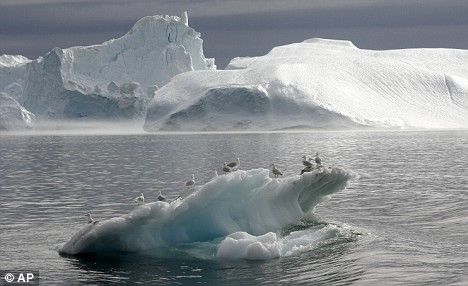
Sea level rise will put 600 million people at risk of being
submerged.
"We seem to be floating in a sea of brackets," de Boer said. After a
week of discussion, this text has not significantly shrunk. Many
disputes mainly depend on whether the U.S. Senate can pass the climate
bill this autumn. Pershing made it clear that the United States will use
all laws that can serve as a basis for legislation to strive for a
carbon reduction agreement.
"Our focus is not to repeat the ’Kyoto Protocol’," Pershing said,
recalling past climate treaties where the United States had compromised,
but the Senate did not approve them. De Boer optimistically stated that
after the House of Representatives passes the climate bill, the United
States’ greenhouse gas emissions will be seen to drop by 13% compared to
1990, but this still does not reach the 20% target promised by the
EU.
In the end, Europeans want to be in a comparable position with
Americans. Pershing said that due to domestic constraints, it is not yet
clear how to complete this. The U.S. position is to reach an agreement
rather than stipulate a reduction ratio that satisfies every developed
country. "It should be up to the country to decide relevant matters,"
Pershing said. For developing countries and regions, the United States
is seeking some plans that are not legally bound by targets but are
bound by actions, Pershing said. One example is a quantified (specified
number) commitment regarding how Brazil will exploit forest
resources.
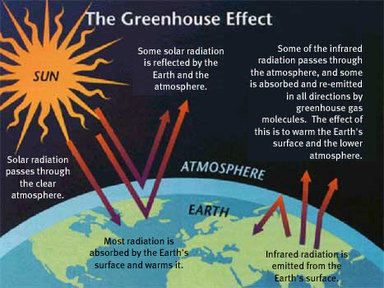
Greenhouse effect diagram
If developing countries are to limit emissions to adapt to climate
change, they will always seek development funds from developed
countries. But so far, no developed country has suggested increasing the
amount of this fund to more than 10 billion US dollars, participants
said.
Meanwhile, according to Dessima Williams, the Permanent
Representative of Grenada to the United Nations and Chairwoman of the
Alliance of Small Island States, industrial countries are currently only
promising to reduce emissions by 10-16% compared to 1990 at the
negotiating table. Williams pointed out that if there are no other
changes, these commitments will still cause the temperature to rise by
more than 3 degrees Celsius. This level of warming is much higher than
the goal established at the G8 summit held in L’Aquila, Italy, last
month, which was to control the temperature rise to no more than 2
degrees Celsius above pre-industrial levels.
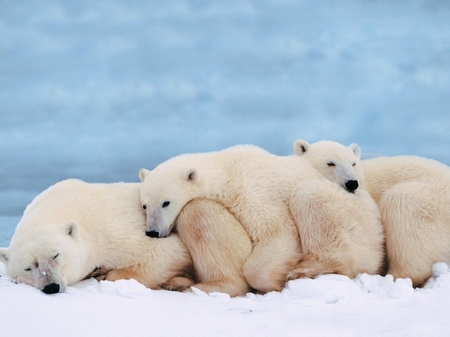
Scientists say: Global warming may lead to polar bears
drowning
In a recent report, the Intergovernmental Panel on Climate Change
confirmed that a reduction of 25% to 40% compared to 1990 is necessary
to avoid the worst impacts of climate change: heatwaves, floods,
droughts, and sea-level rise.
More than 2,000 delegates met in Bonn this week. This meeting, which
was designated as "informal," is the latest in a series of preparatory
meetings leading up to the United Nations Climate Change Conference in
Copenhagen this December. The next meeting will be held in Bangkok in
late September, followed by Barcelona, Spain, in November.
Global warming: Arctic residents also need to install air
conditioning
Can the World Unite to Combat Climate Change? Ongoing negotiations on an international
agreement continue to face significant disagreement
By Paul Voosen
The latest round of preparatory talks for the U.N. climate conference
concluded today with negotiators lamenting that the languid pace of
talks could mean there won’t be a deal on emissions in Copenhagen this
December.
"It would be incomprehensible if this opportunity were lost," said
Yvo de Boer, executive secretary of the U.N. Framework Convention on
Climate Change. For any hope of a deal, he said, "the speed of the
negotiations must be considerably accelerated at the [next] meeting in
Bangkok."
The United States’ lead climate negotiator, Jonathan Pershing, added
to the warnings.
"If we don’t have more movement and more consensus than we saw here,
we won’t have an agreement," Pershing said.
Though the problems were many, there were also glimmers of hope in
the current round, such as a collective agreement on what should be
done, said Anders Turesson, Sweden’s lead climate negotiator and
chairman of the E.U. working group.
"What we’re talking about is a profound change of industrial
civilization," Turesson said. "It would be surprising if there weren’t
stumbling blocks."
The negotiators were wrapping up a week of talks in Bonn, Germany,
aimed at narrowing the number of options in the 200-page main
negotiating document. This text, which will serve as the basis for
negotiations for the successor to 1997’s Kyoto Protocol, is currently
inundated with some 2,000 bracketed statements highlighting areas of
disagreement.
"We seem to be afloat on a sea of brackets," de Boer said. The
document has not been significantly slimmed down in the week’s
discussions.
Much debate hinges on whether the U.S. Senate will pass climate
legislation this fall. Pershing made it clear that the United States
will use whatever domestic legislation it passes as the basis for its
carbon reduction agreements.
"Our focus is not to repeat Kyoto," Pershing said, recalling the
climate treaty that the United States helped negotiate but the Senate
did not ratify.
The rosiest interpretations of the House’s recently passed climate
bill would see U.S. greenhouse gas emissions dropping by up to 13
percent from 1990 levels, de Boer said, well below commitments made by
the European Union to reduce its emissions by 20 percent.
In the end, Europeans want to be on comparative terms with the
Americans, Turesson said. How that will be accomplished is unclear,
given the domestic limits the United States faces.
The U.S. position is that the agreement that will emerge, rather than
mandating a single percentage cut that will be met by every wealthy
nation, "is something [that will be] conceived country by country,"
Pershing said.
From developing nations, the United States is seeking not legally
binding targets but legally binding actions, Pershing said. One such
example would be a quantified commitment from Brazil on how it will
tackle deforestation.
Developing nations have been seeking financing from developed
countries if they are to limit their emissions and adapt to climate
change. So far, there has not been one proposal from developed nations
that would raise more than $10 billion a year for such funding,
negotiators said.
Meanwhile, the commitments currently on the table from industrial
countries will only reduce emissions between 10 and 16 percent from 1990
levels, according to Dessima Williams, the permanent representative of
Grenada to the United Nations and chairwoman of the Alliance of Small
Island States.
Unless changed, these pledges will lead to temperature change of more
than 3 degrees Celsius, Williams said.
Such a temperature increase is well above the goal agreed to by the
world’s wealthiest nations at the Group of Eight summit in L’Aquila,
Italy, last month. There, countries including the United States, Canada
and Russia agreed to cap global warming at 2 degrees Celsius above
preindustrial levels.
In its most recent report, the Intergovernmental Panel on Climate
Change identified a 25 percent to 40 percent cut in emissions from 1990
levels as necessary to avoid the worst effects of climate change: heat
waves, floods, droughts and rising sea levels.
More than 2,000 representatives met in Bonn this week. The
consultation, which was characterized as "informal," is the latest in a
series of meetings leading up to the U.N. climate change conference in
Copenhagen this December. Further meetings will take place in Bangkok in
late September and Barcelona, Spain, in November.