(Note: Since this article contains many radical signs, it is recommended to read it directly using IE, or use IE+MathPlayer. Firefox’s display of radical signs is quite poor.)
As is well known, algebraic equations of degrees 1 to 4 all have root-finding formulas (though they may not always be the simplest method). Most people are likely very familiar with the solutions for 1st and 2nd-degree equations. However, do you know how to solve a cubic equation? ax^3+bx^2+cx+d=0 \quad (a\neq0)
There is a fair amount of information available online regarding this topic, but it often suffers from two drawbacks: first, a lack of proper programs to describe professional mathematical formulas (a common issue on many websites); and second, the language is often too professional and not accessible to the general public (such as on Wikipedia).
To understand the root-finding formula for a cubic equation, one must first know that, in general, an n-th degree algebraic equation has n roots. For the most basic cubic equation x^3+p=0, we have: x_1=-\sqrt[3]{p} At the same time, according to Vieta’s formulas, we have x_1+x_2+x_3=0 and x_1\cdot x_2\cdot x_3=-p. Since we already know x_1=-\sqrt[3]{p}, this becomes a system of quadratic equations for x_2 and x_3, which can be solved (i^2=-1, the imaginary unit): x_2=-\frac{1}{2}(-1+\sqrt{3}i)\sqrt[3]{p}, \quad x_3=-\frac{1}{2}(-1-\sqrt{3}i)\sqrt[3]{p} In particular, \frac{1}{2}(-1+\sqrt{3}i) is commonly written as \omega, so: x_2=-\sqrt[3]{p} \omega,\quad x_3=-\sqrt[3]{p}\omega^2
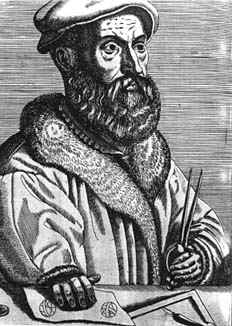
Solving the General Cubic Equation:
For a cubic equation ax^3+bx^2+cx+d=0 \quad (a\neq 0), we can use the substitution method. Let y=x+\frac{b}{3a} to transform the original equation into a cubic equation in terms of y: y^3+py+q=0 \Leftrightarrow y^3+py=-q where \begin{aligned} &y=x+\frac{b}{3a}\\ &p=\frac{c}{a}-\frac{b^2}{3a^2}\\ &q=\frac{2{b^3}}{27a^3}-\frac{bc}{3a^2}+\frac{d}{a} \end{aligned}
(Cardano’s Proof) Since (A-B)^3+3AB(A-B)=A^{3}-B^{3}, we can set 3AB=p, A^{3}-B^{3}=-q, and y=A-B. This transforms the problem into a system of equations of the sixth degree in terms of A and B. This system is quite simple and, through substitution, becomes a system of quadratic equations that can be solved. The final results we obtain are: \begin{aligned} &A=\sqrt[3]{-\frac{q}{2}+\sqrt{\left(\frac{q}{2}\right)^2+\left(\frac{p}{3}\right)^3}},\\ &B=\sqrt[3]{\frac{q}{2}+\sqrt{\left(\frac{q}{2}\right)^2+\left(\frac{p}{3}\right)^3}} \end{aligned}
From here, it is easy to derive the solutions to the original equation.
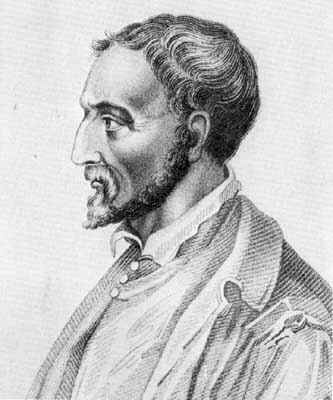
Ultimately, we find that the root-finding formulas for the equation y^3+px+q=0 are: \begin{aligned} &x_1=\sqrt[3]{-\frac{q}{2}+\sqrt{\left(\frac{q}{2}\right)^2+\left(\frac{p}{3}\right)^3}}+\sqrt[3]{-\frac{q}{2}-\sqrt{\left(\frac{q}{2}\right)^2+\left(\frac{p}{3}\right)^3}}\\ &x_2=\omega \sqrt[3]{-\frac{q}{2}+\sqrt{\left(\frac{q}{2}\right)^2+\left(\frac{p}{3}\right)^3}}+\omega^2\sqrt[3]{-\frac{q}{2}-\sqrt{\left(\frac{q}{2}\right)^2+\left(\frac{p}{3}\right)^3}}\\ &x_3=\omega^2 \sqrt[3]{-\frac{q}{2}+\sqrt{\left(\frac{q}{2}\right)^2+\left(\frac{p}{3}\right)^3}}+\omega \sqrt[3]{-\frac{q}{2}-\sqrt{\left(\frac{q}{2}\right)^2+\left(\frac{p}{3}\right)^3}}\\ &\omega=\frac{1}{2}(-1+\sqrt{3}i) \end{aligned}
Having read this far, if you want to challenge yourself, please try to write down the general root-finding formula for ax^3+bx^2+cx+d=0 \quad (a\neq 0) ^_^
As for quartic equations, I will write about them when I have time.
References:
When reposting, please include the original link: https://kexue.fm/archives/26
For more detailed reposting guidelines, please refer to: Scientific Space FAQ